Auditing A Potential Medical Device Contract Manufacturer

SG Healthcare Device Contract Manufacturing

In Asia, Singapore stands out as a trusted base for medical device contract manufacturing. It offers reliable services for OEMs, startups, and medical technology companies. The city-state features strict regulation, advanced engineering talent, and certified cleanroom facilities. These enable the production of medical disposables, diagnostics, drug-delivery devices, and precision components on a large scale.

Local contract manufacturers prioritize quality with cost control. Their investments span https://amt-mat.com/business/medical-device-manufacturer/cleanroom-assembly capital equipment, continuous upskilling, and unambiguous work instructions. Process engineers and DFM specialists guide products from prototype through mass production. This covers complex components—such as catheters—built in ISO 7/8 cleanrooms.

In Singapore, many partners deliver end-to-end outsourced medical device manufacturing. Offerings include design support, process development, validation, manufacturing transfer, and project management. This end-to-end capability and scalability make Singapore an attractive choice for companies needing dependable production and quick market entry.

AMT

Key Takeaways

  • Singapore is a proven center for medical device contract manufacturing with strong regulatory and quality systems.
  • Complex devices and precision parts are produced in ISO 7/8 cleanrooms.
  • End-to-end services span design to high-volume manufacturing.
  • Investments in capital, training, and clear work instructions drive consistent quality and cost control.
  • Scalable processes enable smooth transitions from prototype builds to mass production for OEMs and startups.

Why Singapore is a Strategic Hub

A strong ecosystem in Singapore supports global medical device contract manufacturing. It combines strict regulatory oversight with industrial skills and logistics. This combination supports rapid product development and reliable supply, making it attractive for medical device outsourcing and original equipment manufacturers.

Quality and Regulatory Foundations

Singaporean regulators require adherence to international standards such as ISO 13485. Controlled ISO 7/8 cleanrooms are mandatory for manufacturers. The foundation of compliant production lies in clear work instructions, strong document control, and traceability. Detailed records support audits and submissions, enabling access to US, EU, and Asian markets.

Skilled workforce and engineering expertise

Local teams consist of engineers and technicians with expertise in precision metal and ceramic processing. They handle a range of processes, including metal injection molding (MIM), ceramic injection molding (CIM), and heat-treated stainless steels like 17-4PH. Sintered tungsten alloys are produced for surgical and endoscopic applications. Such capabilities enable development and high-yield manufacture of complex assemblies and disposables.

Supply Chain, Scale, and Infrastructure

Manufacturers provide scalable production lines and tooling for smooth transitions from prototypes to volume production. Hydraulic core-pull sliders and dedicated MIM/CIM dies facilitate economical mass production of complex forms. Port connectivity and supplier networks reduce lead times and simplify global outsourcing.

Contract Manufacturing of Medical Devices

Singapore acts as a hub serving global OEMs and startups for contract manufacturing of medical devices. End-to-end support spans initial design through ongoing production. This approach minimizes development risks and accelerates regulatory approval.

Scope of Contract Manufacturing in Singapore

Singapore providers offer design support, engineering, and process development. Rapid prototyping, cleanroom assembly, validation, and full regulatory documentation are standard. This ensures smooth transition from design to production.

Manufacturers manage ongoing output with traceability and change control. This strategy reduces the time to market and minimizes compliance risks.

Types of devices commonly produced

A broad range is produced, from disposables to complex systems. They create swabs, single-use components, and drug-delivery systems.

Complex interventional items are made in ISO 7/8 cleanrooms. Catheters and robotic-assisted surgical components are common examples. Precision metal and ceramic parts are used in endoscope assemblies and life science instruments.

Mass-produced parts employ MIM/CIM processes for both reusable and single-use assemblies. Common materials include 316L stainless steel, tungsten electrodes, and ceramic insulators.

OEM & Startup Advantages

OEMs and startups gain cost-effective pathways by collaborating with a contract manufacturer. MIM often cuts unit cost relative to machining. It also supports high-volume output while preserving design complexity.

Providers support >200,000 parts monthly in proven mass production. Support includes validated assembly, process validation, and detailed regulatory files. This meaningfully lowers compliance burden.

Value-added engineering plus continuous improvement programs raise quality while controlling cost. Singapore https://amt-mat.com/guide-on-high-precision-plastic-injection-molding/ emerges as a practical center for medical device production.

Singapore’s Advanced Manufacturing Capabilities

A broad set of manufacturing capabilities exists in Singapore’s MedTech cluster. It supports both prototype needs and large-scale medical device production. Materials expertise is combined with precision tooling by local firms. The outcome is tight tolerances across devices, reinforcing Singapore as a prime choice.

Precision Manufacturing for Complex Components

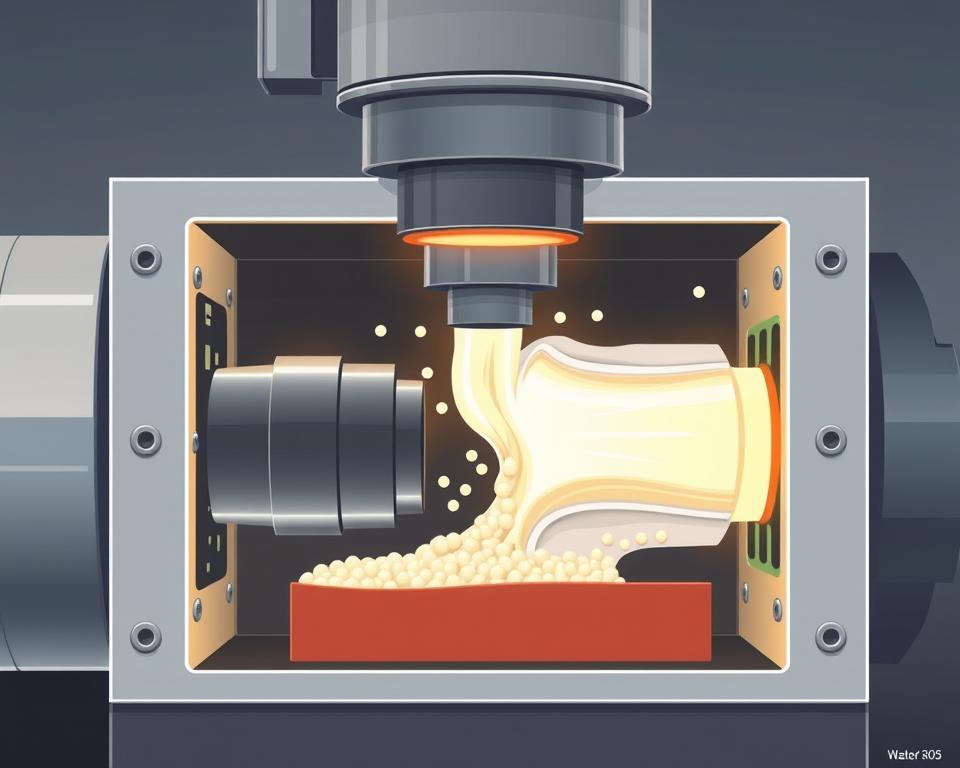
Advanced methods such as Metal Injection Molding (MIM) and Ceramic Injection Molding (CIM) produce detailed geometries. Examples include internal channels, thin-wall insulators, and complex electrodes. Tooling innovations—like hydraulic core-pull slider systems—enable multiple through-holes and 90° internal channels. Such features are vital in life-science equipment.

Material selection is carefully chosen to meet clinical demands. For strength, heat-treated 17-4PH stainless is used in surgical parts. Stainless Steel 316L is preferred for implantable and fluid-contact components because of its corrosion resistance. Specialized electrodes use tungsten alloys for post-sinter ductility and density.

Proven volumes and industry awards back these capabilities. Singapore manufacturers have successfully completed multi-million-part programs for robotic-assisted surgical systems. They have also received recognition for the quality of their components.

Cleanroom production and assembly

ISO 7 and ISO 8 cleanrooms are available for catheter development, diagnostic kits, and sterile single-use assemblies. These controlled environments, combined with documented procedures and trained operators, ensure traceability and batch integrity during assembly.

Standardized Work Instructions and continuous skills training help reduce variation in assembly outcomes. These systems enable a contract manufacturing company to meet regulatory expectations for aseptic handling and sterility assurance.

Scalable production and high-volume capacity

Manufacturers offer full lifecycle support, from proof-of-concept parts to high-volume runs. Process development with automation keeps scale-up cost-effective and quality intact.

Capacity examples include sustained outputs above 200,000 pieces monthly for disposables. Millions of cumulative deliveries have solidified Singapore firms as reliable outsourcing partners. Ongoing supply is maintained for global markets.

Manufacturing Transfer with Quality and Validation

Validated production and smooth transfer rely on strong project management, clear instructions, and trained operators. A medical device contract manufacturer meticulously maps each stage, sets milestones, and manages risks. Timelines are protected and quality ensured with this approach.

Planning the Transfer

Planning begins with a detailed charter and resource matrix. Teams in Singapore employ phased handovers to transition production from an OEM to contract manufacturing services smoothly. Supply disruptions are avoided.

Implementation is staged, including pilot runs, readiness reviews, and https://amt-mat.com/a-deep-dive-into-contract-manufacturing-of-medical-devices/ operator qualification. Consistency during scale-up relies on documented procedures and training records.

Developing and Validating Processes

Engineering teams focus on designing for manufacturability, then develop processes that meet performance targets. Validation encompasses equipment qualification, process capability studies, and in-line quality controls. If sterilization is needed, cleaning and sterilization validations confirm safety standards. Continuous improvement with capital investment keeps efficiency and cost-effectiveness high.

Regulatory Documentation & Traceability

Comprehensive records are vital for regulatory compliance in both local and international markets. Traceability logs, batch records, and change control supply a clear audit trail for regulators and PMS. Traceability systems grow with volume, linking components, operators, and test data. High-quality documentation minimizes delays in submissions and strengthens partnerships in medical device outsourcing.

Choosing the Right Medical Device Contract Manufacturer in Singapore

Partner choice directly impacts time-to-market, cost, and quality. Singapore boasts a rich ecosystem of specialists and full-service firms. Support spans every stage of medical device outsourcing. Emphasize practical factors relevant to regulated devices.

Key technical criteria include manufacturing methods, materials, and cleanroom class. Ensure the availability of precision processes like metal injection molding (MIM) and ceramic injection molding (CIM). Confirm experience with alloys such as 17-4PH, 316L stainless, and tungsten. Confirm ISO 7/8 cleanroom capability for assembly/packaging.

Scalability and capacity are next in importance. Evaluate ability to scale from prototype to high volume. A reliable contract manufacturer should have staged ramp plans and examples of large-scale production.

Quality systems and regulatory readiness are vital. Confirm documented instructions, robust training, and complete traceability. These elements reduce risk during transfer and ongoing production.

Project management and transfer experience are critical. Seek structured transfer plans and phased implementations. A strong partner presents risk mitigation and post-transfer support.

Value-added capabilities

Specialized tooling and DFM advice are key value-added capabilities. Examples: MIM for high-volume surgical components and hydraulic core-pull tooling for internal channels. CIM ceramic insulators with tungsten electrodes provide compact endoscope solutions.

Proven deliveries and industry recognition matter. Look for suppliers with a track record of producing millions of parts for robotic-assisted systems. Training continuity and capital investments improve manufacturability and reduce costs over the lifecycle.

Partnership model and commercial considerations

Check for cultural fit and contract alignment. Clarify design support, IP protections, and contract-term flexibility. A preferred contract manufacturer will tailor agreements to align with your road map.

Cost drivers include tooling amortization plus MIM/CIM unit-cost benefits at scale. Review minimum order quantities, expected lead-times, and logistics options. A transparent commercial model helps predict total landed cost for various medical devices.

The greatest value often comes from long-term collaboration. Many Singapore-based partners position themselves as trusted allies. They provide innovation, development support, and reliable production for medical device outsourcing.

Closing Summary

Singapore stands out as a key location for device contract manufacturing. It features regulated cleanrooms, skilled engineering teams, and technologies such as MIM and CIM. Together, these enable reliable builds at prototype and mass scale. This helps companies swiftly transition from design to compliant production, reducing delays.

Outsourcing medical device manufacturing in Singapore offers significant advantages for OEMs and startups. Cost-effective mass production leverages lower-cost MIM instead of costly machining. Validated transfer, strong quality processes, and thorough documentation with traceability are assured. A strong logistics/supplier network streamlines production and worldwide distribution, reducing lead times.

Selection should center on technical capability, ISO-certified systems, available capacity, and proven histories. Look for contract manufacturers with multi-million part deliveries or award-winning component programs. These criteria separate capable manufacturers from strategic partners and minimize late-stage transfer risks.

Choose Singapore partners for engineering-led, scalable, regulatory-compliant production. It speeds time-to-market and protects quality. Whether you require medical device contract manufacturing, contract manufacturing of medical devices, or outsourced medical device manufacturing, Singapore’s ecosystem provides a clear path to efficient, high-quality production.

The Integration of Software and Hardware in AMT Endoscopy

AMT Endoscopy in Singapore: Expert Care.

Today, more than 40% of advanced endoscopic devices across Southeast Asia incorporate precision components produced via Metal Injection Molding (MIM). This boosts safe, speedy procedures across the area.

Let’s talk about how AMT in Singapore is leading with their blend of clinical skills and high-tech manufacturing for endoscopy. Their approach combines MIM, 100K cleanroom assembly, and ETO sterilization. This all helps in making single-use devices and sterile packaging for https://amt-mat.com/business/mim.

In Singapore, endoscopy centers are seeing big benefits. Improved imaging, miniaturized optics, and strong training programs lead the way. For patients, this means less invasive tests and treatments, shorter sedation, and quicker healing.

AMT’s work also helps solve bigger problems like costs, the need for specialist doctors, and meeting rules across the area. This article outlines how AMT’s endoscopy capabilities support clinicians and patients alike. Focus areas include access, safety, and cost improvement.

Highlight Reel

  • AMT endoscopy integrates MIM, 100K cleanroom assembly, and ETO sterilization to deliver reliable components.
  • AMT endoscopy supports high-definition, minimally invasive procedures that improve patient recovery.
  • Singapore endoscopy centers leverage AMT’s parts to strengthen clinical workflows and device safety.
  • Advanced devices reduce sedation and enable diagnostic-plus-therapeutic procedures in one session.
  • Access is shaped by cost, specialist training, and regulatory requirements across the region.

Endoscopy Explained and AMT’s Contribution

Endoscopy lets doctors view internal anatomy without large incisions. It uses small cameras on flexible or rigid scopes. This approach enables visualization, diagnosis, and treatment in a single session. It cuts down on recovery time and avoids big surgeries.

AMT - endoscopy

Endoscopy: Definition & Purpose

Doctors use endoscopy to check out areas like the stomach, lungs, and kidneys. Biopsies, polyp removal, and targeted therapy can occur with minimal incisions. This means patients don’t need heavy sedation, can leave the hospital sooner, and get back to life quicker.

How AMT Advances Endoscopy with Technology

AMT manufactures precision parts that enhance endoscope performance. Using MIM and cleanroom assembly meets stringent standards. Their parts, like biopsy tools and electrodes, come ready for doctors to use. This makes things faster and safer for patients.

From Early Scopes to HD Miniaturization

Early endoscopes of the 19th century were basic tubular devices. Today’s systems use mini digital cameras and highly flexible scopes. Enhanced imaging and lighting improve visualization and diagnosis. Early AI even helps spot problems faster.

With suppliers like AMT, these tools keep improving. They help doctors in Singapore do more complex treatments with less risk. Patients receive high-quality care without extensive surgery.

endoscopy by AMT

AMT is your all-in-one partner for those making devices and hospitals in Singapore. They blend fine manufacturing, cleanroom assembly, and sterilization for use-ready tools that match clinical timelines. This accelerates development from rapid prototypes to full-scale production while maintaining regulatory focus.

Overview of AMT endoscopy solutions and services

AMT’s endoscopy solutions include Metal Injection Molding (MIM), finding precision components, assembly in a 100K cleanroom, and ETO sterilization. The company aids in producing single-use devices, sterile packaging that peels open, and sterilization after manufacturing so instruments can go straight to the operating room. This results in shorter waiting times for manufacturers and gives doctors sterile, ready-to-use tools right away.

Integrating MIM with Device Design

MIM creates complex geometries and micro-features that are hard to achieve otherwise. AMT uses DfM to consolidate parts, reducing component count. Results include tight precision at micro-scales, improved reliability, and reduced assembly time.

AMT Component Examples for Endoscopy

AMT supplies biopsy forceps and graspers for GI/urology, clamps and scissors for delicate handling, and precision biopsy needles. They also offer single-use TURP bipolar electrodes in stainless steel or tungsten alloy, all sterile in packages that peel open. Each item is built with consistent quality and assembled under clean conditions for clinical safety.

Component Manufacturing Method Typical Materials Clinical Use
Biopsy forceps (GI/Uro) MIM plus secondary finishing 316L stainless steel Targeted tissue sampling (GI, urology)
Endoscopic graspers Precision MIM Stainless & tungsten alloys Delicate tissue handling/retrieval
TURP bipolar electrodes MIM plus post-machining Tungsten alloy, stainless steel Bipolar resection in urology
Clamps and micro-scissors MIM and micro-machining Medical-grade stainless steel MI instrument tips
Precision biopsy needles MIM + heat treatment Medical stainless steel Targeted tissue extraction with precise geometry

With AMT’s endoscopy solutions, the number of assembly steps drops and consistency in each batch goes up. Doctors get devices that are clean, packaged, and ready for surgery. Manufacturers achieve efficient, cost-effective scaling.

Advanced Techniques in Singapore

Singapore is known for its wide range of advanced endoscopy methods. These are for diagnosis and treatment. Leading hospitals and centers have endoscopy suites. They deploy the latest tools for simple and complex cases alike.

GI Endoscopy: Diagnostic & Therapeutic

GI endoscopy includes EGD and colonoscopy. They offer direct viewing, targeted biopsy, polypectomy, and control of bleeding in one session. EMR and ESD techniques treat early cancers endoscopically. And they do this without the need for open surgery.

Minimally Invasive Approaches & Recovery

MI endoscopy relies on flexible scopes, mini cameras, and therapeutic tools. These advances limit tissue trauma and reduce sedation. As a result, hospital stays shorten. Patients resume normal activities sooner and face fewer complications than with open surgery.

One-Session Diagnostic & Therapeutic Endoscopy

Many endoscopic procedures offer both diagnosis and treatment in a single session. This enables doctors to find and remove polyps, take tissue samples, and perform coagulation or resection all at once. It reduces the need for multiple anesthesia doses, cuts down on hospital times, and enables care in outpatient or day surgery settings.

Advanced endoscopy in Singapore is enhanced by AMT-enabled tools and precise components. These innovations allow doctors to carry out complex procedures with greater accuracy and safety. Consequently, regional patients access more up-to-date care.

AMT Endoscopy Technology & Instrumentation

AMT provides practical, clinical-grade advancements for endoscopy. They integrate optics, precision metals, and disposables. This helps doctors see clearer and work safer during procedures.

HD Imaging, Mini Cameras & Lighting

Surgeons get clear, live imagery with high-definition and mini cameras. Bright LEDs and fiberoptic lights boost color and detail. This helps spot issues faster, making surgeries shorter and safer.

Role of Metal Injection Molding in producing precision endoscopic components

MIM lets AMT make precise metal parts for endoscopy. Biopsy forceps, grasper jaws, and electrode tips are durable and dimensionally accurate. This method makes the parts reliable by reducing assembly steps.

Single-use instruments and sterile packaging practices for safety

Single-use tools arrive sterile to lower infection risk. ETO sterilization and clean assembly underpin safety. Sterile packaging and detailed tracking make clinical processes secure.

Feature Clinical Benefit AMT capability
HD imaging Improved lesion detection and treatment precision Integrated CMOS + LED/fiber lighting
MIM precision parts Precision, strength, and consolidation MIM for forceps, electrodes, micro-instruments
Sterile single-use instruments Lower infection risk, simpler reprocessing Peel packs, ETO, cleanroom assembly
Traceability & packaging Compliance and supply confidence Lot traceability, sterile barrier systems, validated processes

AMT unites imaging, MIM components, and single-use tools for modern practice needs. They focus on accuracy, reliability, and safety in Singapore and beyond.

Singapore Endoscopy Care

Singapore hospitals and specialty centers maintain a robust endoscopy network. Expert teams—gastroenterologists, nurses, and techs—use advanced equipment to manage care efficiently. High-quality devices support safety for local and international patients.

How AMT components support clinical workflows

AMT precision parts reduce failures and keep schedules on time. Instruments like biopsy forceps meet exact standards, quickening case turnover. Reliable quality smooths procedures and reduces delays.

Improved Patient Experience

Modern equipment with thinner scopes increases patient comfort. These improvements mean many patients only need mild sedation. Result: less tissue trauma and faster discharge.

Clean Processes & Sterility

AMT aligns with Singapore’s hospital sterilization methods, using cleanrooms and ETO sterilization. Single-use options reduce reprocessing workload and infection risk. This ensures equipment is safe and ready for patient care.

Operational Efficiency & Ecosystem

Disposables accelerate turnover and free staff for clinical tasks. Consistent AMT supply keeps high-demand services running smoothly. This teamwork makes sure every patient gets consistent, high-quality care.

Operational Need AMT Contribution Benefit for Patient Care
Reliable instruments Precision MIM components for forceps and graspers Fewer delays, safer outcomes
Faster turnover Single-use devices and stocked sterile kits Higher throughput, reduced wait times
Sterility assurance 100K cleanroom assembly with ETO sterilization Lower infection risk and compliant workflow
Patient experience Mini scopes, refined accessories Less sedation, less discomfort, quicker recovery

Endoscopy specialist skills and training

Modern endoscopy demands formal education plus hands-on practice. Doctors specializing in the stomach, urinary system, or surgeries get specific training. Simulation and supervised cases reinforce competency. This builds safe, confident use of advanced technology.

Operating Advanced Endoscopy Systems

Training for endoscopy focuses a lot on doing many procedures and checking skills. Trainees practice with HD imaging, energy devices, and system management. They also learn about using different types of endoscopy parts and disposable items. This reduces equipment-related errors. Formal assessments and proctored cases are common.

Concentration of expertise and access implications

In Singapore, advanced training concentrates in major hospitals. High case volumes build expertise. However, distant patients may face access barriers. Systems must weigh centralized excellence vs distributed access.

Ongoing Education & Competency

Teams must keep pace with new tools and computer-aided imaging. They often check their work and learn from mistakes to stay safe. Vendors such as AMT offer courses to deepen technical understanding. Up-to-date training means fewer issues and higher patient satisfaction.

Workforce & Cost

Maintaining skills requires training investment and teaching time. These costs influence treatment pricing. Strategic workforce planning supports equitable access.

Endoscopic procedures covered and clinical indications

Endoscopy spans broad diagnostic and therapeutic indications. In Singapore, clinicians apply these methods widely. They check symptoms, handle benign (non-cancerous) problems, and take tissue samples with little trouble for the patient.

GI Indications

Doctors use diagnostic upper endoscopy and colonoscopy to find bleeding sources, look into indigestion issues, and help with checking for colorectal cancer. They also remove polyps, cut out bad tissue, stop bleeding, and take targeted samples. AMT-supplied tools enable precise sampling for early cancer detection.

Urological endoscopy use cases

Ureteroscopy and cystoscopy let doctors see directly inside the urinary tract to find stones, blockages, and tumors. A common procedure for enlarged prostate is transurethral resection. TURP electrodes, used in this procedure, are carefully made. Tips use stainless or tungsten alloys for resection and coagulation.

When minimally invasive endoscopy is preferred

MI endoscopy is preferred for early tumors, benign obstruction, and urgent bleeding. It’s also good for cases where it’s safer to sample in a less invasive way than with open surgery. People with other health problems also get better faster and need less time under anesthesia with this method.

Choosing the Right Approach

Choosing between endoscopic procedures and open surgery depends on the health issue, size and location of the lesion. The choice also relies on the available skills and tools. Patient preference and expected recovery time are important considerations.

Indication Common Endoscopic Approach AMT Component Role
Upper GI bleeding UGI endoscopy + hemostasis HD optics + forceps for targeted sampling/coagulation
Polyp (colorectal) Colonoscopy with polypectomy or EMR Miniaturized graspers and snares produced via precise MIM processes
Possible bladder tumor Cystoscopy with directed biopsy Durable single-use biopsy instruments and endoscopic cameras
BPH Bipolar TURP resection TURP electrodes with single-use stainless steel or tungsten alloy tips for resection and coagulation
Ureteral stone URS + laser lithotripsy Precision tips and mini shafts for passage and manipulation

Regulatory and Sterility Considerations

Patient safety relies on careful cleaning, assembly, sterilization, and record-keeping. AMT operates advanced 100K cleanroom assembly lines. They combine rigorous assembly with validated sterilization. This improves infection prevention and meets hospital standards.

AMT’s cleanroom assembly process finishes with ready-to-use sterile products or devices. For tools that can be reused, the company outlines specific cleaning and sterilization steps. They also explain which sterilization methods work best. ETO is key for heat-sensitive items, ensuring safety and audit readiness.

Choosing between single-use and reusable instruments involves multiple factors. Single-use instruments reduce infection risks and make meeting regulations easier. On the other hand, reusable devices can save money but require a strong system for cleaning and sterilization to stay safe.

In Singapore, medical devices must meet defined standards. Companies have to register with the Health Sciences Authority and show they follow ISO 13485 standards. Electrical components must satisfy relevant IEC standards. Also, providing clinical evidence and conducting post-market surveillance are crucial for keeping up with regulations.

Medical tourism brings extra challenges. Hospitals catering to international patients need detailed records of where their devices come from, their sterilization history, and staff training. This documentation meets foreign insurance/accreditation standards. It supports informed choices and a sterile, traceable supply chain.

Aspect Single-use Reusable
Cross-infection risk Low; one-and-done use lowers cross-contamination Depends on validated reprocessing + tracking
Cost profile Higher per-case consumable cost; lower capital needs Higher capital; lower consumables per case over time
Sterilization Delivered sterile after ETO sterilization or aseptic packaging Needs autoclave/ETO or validated cycles per material
Regulatory & documentation Simpler lot traceability; sterile barrier records Comprehensive logs, maintenance, performance validation
Environment Higher waste volume; growing interest in recycling programs Less disposable waste; energy/water use for reprocessing
Operational impact Reduces reprocessing workload; faster turnover between cases Requires sterilization staff, validated SOPs, and downtime for processing

Hospitals should weigh risk, cost, and compliance when selecting solutions. Good recordkeeping, proper ETO sterilization processes, and clean assembly are crucial. They ensure safety in endoscopic care and help meet regulatory standards.

Economics & Access in Singapore

Advanced endoscopy has clear benefits for patients. However, HD equipment and specialized tools raise costs. These costs affect how much hospitals charge for procedures and how providers set up their services.

State-of-the-art endoscopy suites are capital intensive. Keeping them running adds more costs each year. Disposables and continuous training further increase expense. Collectively, these factors shape overall service cost.

Medical Tourism & Regional Demand

Hospitals in Singapore attract patients from across Southeast Asia. They come for complex procedures they can’t get at home. Short waits and high-quality care are major draws. Cross-border partnerships help manage cost and consistency.

Maintenance, lifecycle, and unit economics

Hospitals balance upfront and lifecycle costs. Frequent need for disposables and new parts can add up. Smart contracting and inventory control can reduce strain. Transparent accounting enables fair center-to-center comparisons.

Equity and two-tier access risks

Concentrating advanced care in a few centers can widen gaps. Who gets access to new tests depends on public funding and insurance. If not handled carefully, only the well-off will benefit. Planning should aim to spread care evenly to all who need it.

Policy & Collaboration

Working together, the public and private sectors can make care both innovative and affordable. Steps like subsidies and clearer pricing help ease financial pressures. Safe use of disposables can also keep infection risks low without raising costs. These efforts help more people get the care they need fairly.

Factor Impact on Pricing Potential Policy Response
Capital equipment Large upfront cost raises per-procedure amortization Subsidies, leasing, shared public suites
Maintenance/software Annual contracts add predictable OPEX Competitive tenders, multi-year agreements
Consumables/single-use Direct per-procedure cost increases Evidence-based adoption, reimbursement adjustments
Training/staffing Higher labor and credentialing costs Gov-funded training, regional centers
Medical tourism demand Revenue can help subsidize advanced services Quality accreditation, transparent pricing for international patients
Supply-chain integration Better availability can lower AMT-enabled endoscopy cost Local incentives, AMT partnerships
Insurance and subsidy models Determines patient out-of-pocket burden Expanded coverage, means-tested support

What’s Next: AI, Remote Care, MIM

Innovation is changing the way endoscopic care is given in Singapore and nearby areas. New technologies in imaging, connecting remotely, and making things are coming together. The result: expanded capabilities, easier workflows, and lower per-procedure cost. These changes affect doctors, companies making devices, and hospitals.

AI-assisted detection and algorithmic support

Machine learning assists in detecting subtle lesions and classifying polyps in real time. AI support increases accuracy and helps catch things that might be missed. This gives doctors an extra pair of eyes while working.

Using AI in endoscopy needs careful checking, clear metrics for performance, and rules to stop bias in algorithms. Clinical teams must learn to interpret AI outputs and balance them with clinical judgment.

Telehealth-enabled devices and remote management

Telehealth enables remote oversight and consultation. Remote experts can observe live, advise on biopsies, and offer second opinions.

Remote device management reduces in-person adjustments and PPE use. Teams can watch over device health, plan upkeep, and update systems without waiting.

Manufacturing for Scalable Precision

MIM manufacturing makes it cheaper to make small, precise parts for modern scopes and tools. MIM consolidates steps, cuts assembly time, and scales output while maintaining quality.

Quicker prototype making and lower costs per item help in improving new designs. Consistency increases device longevity and supports steady clinical supply.

Practical implications for providers and suppliers

AI, telehealth, and MIM improvements enable distributed care and faster diagnosis. Health systems should update training, invest in cybersecurity, and clarify data governance.

Companies that make endoscopy devices should work with doctors. They should validate usability and integrate AI/remote support smoothly into workflows.

Trend Key Benefit Primary Challenge
AI detection Improved lesion detection and standardized reads Validation & bias control, governance
Tele-endoscopy Remote expertise and centralized oversight Bandwidth, privacy, workflow integration
MIM manufacturing Scalable, precise components with lower unit costs Upfront tooling, quality control, regulatory traceability
amt endoscopy solutions End-to-end device and supply continuity for clinics Interoperability, training, maintenance models

As a Final Point

AMT endoscopy in Singapore pairs precision manufacturing with cleanroom assembly. This supports high-quality, minimally invasive care. Their solutions offer clear imaging, dependable single-use tools, and durable components.

The perks include better diagnosis with HD images and AI. Procedures are more streamlined. This yields major improvements for endoscopy departments.

But, there are hurdles like costs of equipment and training. Strict regulatory compliance is also required. Choosing reusable vs single-use affects infection control and cost. Fixing these problems is key to make sure everyone can get the care they need.

In the future, blending AI, telehealth, and better manufacturing will enhance endoscopy services. In Singapore, manufacturers, providers, and policymakers must collaborate. Their goal? To make sure endoscopy help is safe, affordable, and available to all.

How to Vet a Plastic Mold Company for Quality

Step‑by‑Step Guide to Sourcing Injection Molding in China

So, the big meeting just wrapped up. your new product has been approved, time is pressing, and funding is, to put it mildly, limited. Then a voice—perhaps your manager or the CFO—drops the line that gives every project manager a shock: “We should look at sourcing this from China.”

Of course, you acknowledge. It makes sense on paper. The potential savings can be massive. Yet your thoughts are already spinning. You’ve heard the stories, haven’t you? The nightmare of defective parts, opaque communication, and delayed, off-spec shipments. It’s like balancing on a tightrope between a massive cost advantage and project disaster.

But here’s the catch. Procuring China injection molding needn’t be a roll of the dice. It’s simply another project with clear steps. And as with any project, success depends on your methodology. It isn’t about the cheapest offer but about choosing the right supplier and running the process transparently. Disregard those scary tales. Let’s go through a step-by-step guide to succeed.

China injection molding

Step One: Do Your Homework

Before you even whisper the word “supplier” or open a browser tab to Alibaba, you need to get your own house in order. Honestly, more than half of all overseas manufacturing problems start right here, with a weak or incomplete information package. You cannot expect overseas partners to interpret your unspoken requirements. A vague RFQ is like telling a contractor to bid on “a house.” You’ll get wildly varied quotes that are useless.

Your RFQ should be bulletproof—clear, detailed, and unambiguous. It’s the cornerstone of your entire effort.

What belongs in your RFQ?

First, your 3D CAD files. They cannot be skipped. Provide files in common formats (e.g., STEP, IGS) to prevent import issues. This serves as the definitive part geometry reference.

Yet 3D models don’t cover everything. Include precise 2D engineering drawings. Here you specify what 3D can’t show. Examples include tolerances (e.g., ‘25.00±0.05 mm’), material grade, surface finish requirements, and functional callouts. If a specific surface needs to be perfectly smooth for a seal, or a particular hole diameter is vital for an assembly, your 2D drawing needs to shout it from the rooftops.

Next up, material. Avoid generic terms like “Plastic.” Nor just “ABS.” Be specific. Call out SABIC Cycolac MG38 (black), for example. Why? Because there are thousands of plastic variations. Naming the precise grade locks in the mechanical, thermal, and aesthetic properties you need with plastic mold injection.

Your supplier might propose substitutes, but you must set the baseline.

Finally, include the business details. What’s your forecasted annual volume (EAU)? You must specify if it’s a 1K-part tool or a 1M-part production run. Tool style, cavity count, and unit cost are volume-driven.

The Great Supplier Hunt

Now that your RFQ is pristine. now, who do you send it to? The internet has made the world smaller, but it’s also made it a lot noisier. Locating vendors is easy; vetting them is the real challenge.

Begin on popular marketplaces such as Alibaba or Made-in-China. These are great for casting a wide net and getting a feel for the landscape. Use them to build a shortlist, not the final list. You’ll want to quickly build a list of maybe 10 to 15 companies that look promising.

However, don’t end your search there. Think about engaging a sourcing agent. True, they charge a fee. But a reputable agent brings pre-screened factories. They are your person on the ground, navigating the language and cultural barriers. For a first-time project, this can be an invaluable safety net. Consider it timeline insurance.

Another classic method? Trade shows. If you can attend, shows such as Chinaplas transform sourcing. In-person meetings trump emails. Hold samples, talk shop, and gauge professionalism firsthand. Also, leverage the tried-and-true referral network. Tap your professional contacts. A recommendation from a trusted peer is often worth its weight in gold.

Sorting the Contenders from the Pretenders

After firing off that RFQ to a broad pool, estimates roll in. Some will be shockingly low, others surprisingly high. Now, sift through and shortlist 2–3 reliable candidates.

What’s the method? It blends technical checks with intuition.

First, look at their communication. Is their turnaround swift and concise? Is their English good enough for complex technical discussions? The true litmus: are they raising smart queries? A great supplier will review your RFQ and come back with thoughts. “Have you considered adding a draft angle here to improve ejection?” or “We see your tolerance requirement here; our CMM can verify that, but it will add to the inspection time. Is that acceptable?” That’s a huge positive sign. It shows they’re engaged and experienced. Anyone who simply agrees to all specs is a red flag.

Next, dig into their technical capabilities. Request their machine list. More importantly, ask for case studies of parts they’ve made that are similar to yours in size, complexity, or material. Don’t pick a micro-molding shop for large components.

Then comes the audit. You can’t skip this. As you vet staff, you must vet suppliers. You can either go yourself or, more practically, hire a third-party auditing firm in China to do it for you. They perform a one-day factory inspection. They authenticate the firm, review ISO credentials, evaluate machines, and survey operations. It’s a tiny cost for huge peace of mind.

Transforming CAD into Real Parts

After picking your vendor, you’ve negotiated the price and payment terms—a common structure is 50% of the tooling cost upfront to begin work, and the final 50% after you approve the first samples. Now the real fun begins.

The first thing you should get back after sending your payment is a DFM report. DFM means Design for Manufacturability. It’s the engineering critique for moldability. The report calls out sink-risk zones, stress-causing corners, and draft angle gaps. A thorough DFM is a sign of a professional operation. It’s a two-way partnership. Together, you tweak the design for best manufacturability.

Once the DFM is approved, they’ll start cutting steel to make your injection mold tool. Weeks on, you receive the thrilling “T1 samples shipped” notification. These represent the first trial parts. They are your moment of truth.

Expect T1s to need tweaks. It’s par for the course. You’ll find minor defects, off-spec dimensions, or finish issues. You supply feedback, they tweak the tool, and T2 plastic mold in China samples follow. You may repeat this cycle a few times. The key for you, as the project manager, is to have this iteration loop built into your timeline from the start.

At last, you get the perfect shot. It matches all specs, has a pristine finish, and works as required. This becomes the “golden sample.” You ratify it, and it becomes the quality yardstick for production.

Completing the Sourcing Journey

Landing the golden sample is huge, yet the project continues. Next up: mass manufacturing. How can you keep part #10,000 matching your golden sample?

Put a strong QC process in place. This often involves a pre-shipment inspection. Bring in an external QC firm. For a few hundred dollars, they will go to the factory, randomly pull a statistically significant number of parts from your finished production run, and inspect them against your 2D drawing and the golden sample. They’ll send you a detailed report with photos and measurements. Once you sign off, you greenlight shipping and the last payment. This step saves you from a container of rejects.

Finally, think about logistics. Clarify your Incoterms. Is your price FOB (Free On Board), meaning the supplier’s responsibility ends when the goods are loaded onto the ship in China? Or EXW, where you handle everything from their gate? Your Incoterm selection drives landed expenses.

Overseas sourcing is a marathon. It’s about building a relationship with your supplier. See them as collaborators, not vendors. Clear communication, mutual respect, and a solid process are your keys to success. It’s a challenging project, no doubt. But with this framework, it’s one you can absolutely nail, delivering the cost savings everyone wants without sacrificing your sanity—or the quality of your product. You’ve got this.

The Cost Breakdown of Selvedge Denim Material

All You Must Learn About Selvedge Denim Matter

One solitary set of antique Levi’s 501s hailing from the 1940s fetched $87,400 at an auction. Why were these trousers valued higher than a high-end automobile? The answer lies in their selvedge denim material construction.

This premium denim represents more than just fabric. It connects us to a time when James Dean wore his 501s in Rebel Without a Cause and Marlon Brando defined cool in The Wild One. These cultural icons didn’t just wear jeans. They sported Nep denim made on historic shuttle looms.

Craft denim derives its title from the self-finished perimeters that avert fraying. “Selvedge” merges “self” with “edge” to denote this distinct weaving technique. Differing from factory-made denim, each yard of selvedge denim material requires patience and expertise to craft.

Its feel conveys a history through faint irregularities and innate variations. Every pair acquires character as its indigo wears down. This individual progression renders heritage denim exceptional to collectors and style aficionados alike.

Many believe premium denim lasts longer than regular jeans. The truth is more nuanced. Selvedge crafting produces lovely material with tidy edges and robust texture. However, sturdiness relies on cotton caliber and heft, not merely on weaving style. What distinguishes craft denim is its capacity to age elegantly and form distinct faded patterns as time passes.

Understanding Selvedge Denim Material

Selvedge denim cloth stands apart from standard denim because of its special build and polished borders. It draws its name from the “self-edge,” a dense woven strip that stops fraying. This top-tier fabric embodies a commitment to slow fashion and classic artisanry, distinguishing it from factory-produced denim.

black selvedge denim fabric

Decoding Self-Edge Construction

The term “selvedge” is a blend of “self” and “edge,” describing fabric with a clean, finished border. This narrow selvage forms along both fabric sides, eliminating the need for additional finishing. Old-school mills craft it at roughly 30–32 inches wide, unlike contemporary denim’s 60-inch span.

Shuttle Looms and Their Unique Fabric Borders

Shuttle-loomed denim’s character comes from vintage weaving machines that weave at slower speeds. They pass one weft yarn across all warp threads in a single sweep. This process yields:

  • Natural texture variations called slubs
  • A gentler hand-feel compared to contemporary denim
  • Tightly bound edges that won’t fray
  • Real irregular traits loved by denim aficionados

Difference Between Selvedge and Standard Denim

Standard denim is made on projectile looms that shoot weft yarns across wider fabric. This method leaves loose threads at the edges, needing overlocked seams to prevent fraying. Selvedge denim fabric, by contrast, demands more time to make. It offers superior durability and a unique aesthetic, justifying its higher cost.

Heritage and Historical Roots of Shuttle-Loomed Denim

The legacy of heritage denim commenced in U.S. textile mills of the 1800s. Shuttle looms were central, weaving material with sealed edges to avoid fraying. This method produced indigo-dyed denim at a slow, meticulous pace, ensuring each yard was crafted with care. The fabric’s limited width turned into a signature of craft denim making.

From 1800s American Mills to Modern Revival

For over a century, American mills relied on shuttle looms. Brands like Cone Mills and White Oak supplied premium denim to workwear companies. By the 1970s, quick projectile looms dominated, displacing most shuttle machines. That change stemmed from the push for more affordable, mass-made jeans. Several historic factories wound down or upgraded, causing vintage looms to languish.

The Rise of Japanese Selvedge Excellence

In the 1980s, Japanese manufacturers revived American shuttle looms. Leading the charge were the Osaka Five brands:

  • Studio D’Artisan
  • Evisu
  • Fullcount
  • Warehouse
  • Denime

Those firms blended U.S. retro flair with Japanese exactness. They researched antique Levi’s templates, reproducing classic indigo denim textures. By 2000, Japanese makers had overtaken the global artisan denim market.

Relevance of Classic Weaving Now

Shuttle looms yield distinct cloth traits that contemporary machines cannot replicate. The slower weaving process allows for irregular textures and deeper indigo penetration. Denim aficionados prize these flaws as hallmarks of genuine artistry.

Shuttle Loom Features Modern Loom Features
29-31 inch fabric width 60+ inch fabric width
3-4 yards per hour 15-20 yards per hour
Natural irregularities Uniform texture
Self-finished edges Cut edges requiring overlocking

How Premium Denim Gets Made on Vintage Looms

Premium denim production kicks off with the steady rhythm of antique shuttle looms. These devices vary greatly from today’s looms. They shuttle yarn across the full width at once, binding edges without further work. This method ensures selvedge denim has a clean, non-fraying edge.

Vintage looms weave at a slower pace, producing just 5-6 meters of slub denim daily. This is in stark contrast to modern machines, which can weave 200 meters. The slower speed benefits the yarn in several ways:

  • Less tension on fibers creates a softer hand feel
  • Natural irregularities remain intact for unique texture
  • Uneven surfaces lead to distinctive fading patterns
  • Narrow fabric width (typically 29-32 inches) reduces cutting waste

Manning these age-old looms calls for seasoned artisans. Weavers tweak tension, keep rhythm, and handle fixes. Every loom boasts its own personality. Many were built in the 1920s and require know-how passed through the ages. This manual process renders shuttle-loomed denim a genuine craft item.

The slim width of dry denim on antique looms offers a real advantage. Jean makers can use the self-finished edge as the outseam, eliminating waste. This highlights the material’s genuine build. Every roll has its own story, with subtle variations that mass production can’t replicate.

Raw Denim vs. Selvedge: Key Distinctions

Numerous denim lovers conflate raw denim with selvedge denim. This misunderstanding crops up while seeking high-end jeans. The truth is, these terms describe different aspects of denim production. Knowing the difference helps you make better choices and appreciate each type’s uniqueness.

Why Selvedge Doesn’t Always Mean Raw

Selvedge refers to the weaving method on vintage shuttle looms, creating self-finished edges. Raw denim means unwashed fabric straight from the mill. A selvadge raw denim fabric wholesaler might offer both washed and unwashed options. Brands like Naked & Famous produce selvedge jeans, sometimes pre-washed or with stretch.

The weaving style is identical. However, finishing transforms both the cloth’s texture and appearance.

Washed vs Unwashed Denim Options

All denim starts as dry denim prior to wash. Weavers ship both standard and selvedge bolts unwashed. The main differences are:

  • Raw denim evolves custom fade patterns via use
  • Pre-washed denim offers instant comfort and stable sizing
  • Sanforized raw shrinks little after initial laundering
  • Unsanforized cloth contracts substantially when wet

Clearing Up Denim Myths

Not all raw denim comes from shuttle looms. Contemporary projectile looms likewise churn out unwashed textile. Their appeal converges since consumers prize longevity, customization, and artistry in both selvedge and raw denim. Both varieties entice denim devotees prepared to spend time for ideal custom fading.

Spotting Genuine Selvedge Denim Traits

When you’re in the market for selvadge raw denim fabric wholesaler, being able to spot genuine selvedge denim material is key. It distinguishes you from casual shoppers. Authentic selvedge denim features attributes absent in normal denim. Understanding these features ensures you’re investing in authentic premium denim.

Finding the Selvedge ID

The simplest way to identify selvedge denim is by checking the outseam. Turn up the cuff and look at the seam along the outside of the leg. Real selvedge denim shows a neat, sealed edge with dyed yarns interwoven. Its self-finished perimeter does away with overlock seams used in ordinary denim.

Rolling your cuffs unveils the selvedge ID, giving your outfit a signature detail. The tinted edge threads flow uninterrupted along the outseam, crafting that iconic denim aesthetic fans love. By contrast, non-selvedge jeans sport cut edges bound by serger stitches to stop fraying.

Quality Construction Hallmarks

Top-tier premium denim reveals itself by key build features:

  • Dense, uniform weaving free of stray threads
  • Clean selvedge edges without additional stitching
  • Stable colored yarn running the full outseam
  • Heavy fabric weight characteristic of shuttle looms

What Makes Rainbow Selvedge and Redline Special

Rainbow selvedge denim features multiple colored yarns in the selvedge ID, creating a unique multicolor edge. Redline selvedge, the iconic type, employs red threads in the ID and hails from classic U.S. mills. These distinctive selvedge variants fetch more owing to their rarity and visual charm. Many labels emphasize these traits in their descriptions, simplifying the hunt for real heritage denim.

Why Craft Denim Costs More

The price of artisanal denim frequently surprises first-timers. A pair of selvedge jeans can be three to five times pricier than mass-produced ones.

Grasping the reasons for these prices uncovers the real worth of high-end denim.

Shuttle looms operate at a far slower rate than modern counterparts. While mass-production looms yield fabric swiftly, heritage shuttle looms turn out just 1–2 meters each hour. This deliberate procedure turns a roll of heritage denim into a multi-day project.

The narrow width of selvedge fabric adds to the cost. Whereas conventional denim comes 60 inches wide, shuttle-loomed premium denim measures only 28–32 inches. Such narrowness demands extra planning and precision cutting to optimize usage.

Artisan denim is produced in limited lots. Firms such as Okayama’s White Oak and Kuroki favor excellence over volume. They employ master craftsmen who oversee every step:

  • Hand-checking yarn tension
  • Adjusting loom settings for each fabric type
  • Inspecting every meter for flaws
  • Managing rope-dyeing processes that take weeks

These artisans treat denim-making like fine art. They innovate with special yarns and refine indigo dyeing recipes inherited over ages. Buying heritage denim sustains mills upholding textile customs and craftspeople passionate about their trade.

Black Selvedge Denim Fabric Wholesale Options

The high-end denim scene has expanded past Japan’s classic mills. U.S. labels now vie in the market, offering diverse black selvedge denim wholesale. Finding top suppliers means knowing quality indicators and authentic fabric sources.

Finding Quality Suppliers and Manufacturers

Quality suppliers emphasize heritage weaving and a deep passion for craftsmanship. When searching for a selvadge raw denim fabric wholesaler, look for mills that use vintage shuttle looms. They provide comprehensive fabric details: weight, weave style, and dye processes.

Leading Gold Selvedge Denim Mills

Gold selvedge denim fabric manufacturers focus on premium colored ID lines, adding luxury to jeans. Leading mills produce these specialty fabrics in limited quantities, attracting boutique brands. The gold thread ID gives these fabrics a unique finish, distinguishing them from standard options.

Sourcing Specialty Fabrics Like Nep Denim

Unique textiles such as nep denim require dedicated sourcing paths. Nep denim boasts purposeful slubs for eye-catching texture. Directly working with mills ensures access to these specialized weaves.

Fabric Type Minimum Order Lead Time Price Range per Yard
Black Selvedge 500 yards 6-8 weeks $12-18
Gold ID Selvedge 300 yards 8-10 weeks $15-22
Nep Denim 400 yards 10-12 weeks $14-20

Top Selvedge Styles & Variations

Selvedge denim circles stretch beyond simple indigo. Now, suppliers craft diverse textures and motifs. These demonstrate shuttle-loom weaving’s flexibility. Ranging from faint surface quirks to striking patterns, they deliver one-of-a-kind personality that evolves elegantly with use.

Understanding Slub Denim Texture

Slub denim’s distinctive bumpy texture comes from irregular yarns. These yarns have thick and thin spots, creating a fabric surface with natural variations. Woven on shuttle looms, they form slub-textured selvedge that fades unpredictably.

Every slub denim pair evolves a distinct fade motif. Thick slub raised zones age in contrast to smooth zones, giving each a unique look.

Herringbone Selvedge Traits

Herringbone selvedge denim fabric has a distinctive zigzag pattern, resembling fish bones. This weave creates diagonal lines that shift direction at regular intervals. This design enhances appearance and amps up the material’s toughness.

Labels such as Iron Heart and The Strike Gold often employ this weave in their high-end lines.

Striped Denim Fabric and Unique Weaves

Striped denim blends different yarns to craft vertical or horizontal banding. Factories weave these patterns by switching colored threads as they work. Some popular variations include:

  • Hickory stripe with alternating indigo and white
  • Railroad stripe featuring thin pinstripes
  • Wabash stripe with printed dots over stripes
Fabric Type Visual Pattern Fade Characteristics
Slub Denim Bumpy, irregular surface High contrast, uneven fading
Herringbone Zigzag diagonal lines Subtle vertical streaking
Striped Denim Alternating color bands Pattern remains visible after fading

Caring for Your Heritage Denim Investment

Your heritage denim calls for tailored care to grow its special character. Unlike standard jeans, raw and dry denim morph through use. They form custom fade stories unique to you.

Your first few wears in artisan denim might feel firm and odd. This experience is expected. The fabric needs time to soften and mold to your body shape. Certain fans quicken the break-in by shower-wearing or damp squatting in their jeans. Others choose a slower, natural wear-in routine.

Raw denim develops its best fades when you wait to wash it. Natural skin oils and daily movement produce whiskers at knees and honeycombs on the back. Many owners go six months before their first wash, while some wait a full year. This discipline grants you dramatic, bespoke fades reflecting your motions.

When washing dry denim, flip it and rinse in cold water. Avoid spinning and air-dry out of sunlight. Others opt for gentle hand-wash in a bathtub using a soft detergent. Avoid hot water and dryers, as these can cause unwanted shrinkage and fade loss.

Your denim keeps appreciating as you care for it properly. Every wear layers character, ensuring your jeans are uniquely yours. The rigid start transforms into a comfortable second skin that reflects your lifestyle and movement patterns.

Where to Find Quality Indigo-Dyed Denim

The revival of selvedge denim has unlocked new paths for denim lovers. Large chains now offer indigo denim, while niche shops continue premium slow-fashion offerings. This helps buyers locate real selvedge choices across price ranges for any budget or taste.

Levi’s offers their 501 Original Fit Selvedge Jeans for $148, making heritage craftsmanship accessible to a wider audience. Uniqlo provides Selvedge Straight Jeans at just $50, appealing to those who value style and affordability. For those looking for higher-end options, Buck Mason features Japanese Loom State Selvedge Full-Saddle Jeans at $248. Iron Heart elevates artisan denim with its 634s-18 Vintage Denim for $385, sold at Self Edge.

American brands like Todd Snyder and Buck Mason now compete with Japanese specialists in the selvedge denim market. They understand that heritage weaving and top quality drive slow fashion. Whether you shop digitally or in-store, quality indigo denim is now more reachable for U.S. buyers who value true craftsmanship.

Related: Rainbow Selvedge Denim: Adding Color to Classic Denim

Precious Metal Recycling vs. Traditional Mining: A Comparative Analysis

Mastering Eco-Friendly Precious Metal Recycling

Were you aware that electronic waste throws away over $60 billion of precious metals annually? This staggering figure underlines the critical role of precious metal recycling. It’s not just good for our economy but also for the environment. By recycling metals like gold, silver, platinum, and palladium, we cut down on pollution and save natural resources.

Firms like Dongsheng Metal Trading spearhead the movement toward greener recycling. They ensure these valuable metals are reused, not dumped in landfills. This precious metal recycler approach is key to eco-friendly recycling and sustainable practices.

Central Ideas

  • Each year, e-waste discards over $60 billion in precious metals.
  • Precious metal recycling reduces environmental impact and conserves resources.
  • Valuable metals include gold, silver, platinum, and palladium.
  • Sustainable development depends on eco-friendly recycling.
  • Recycling experts like Dongsheng Metal Trading lead the industry.

Exploring Precious Metals and Their Worth

Rare metallic elements known as precious metals attract both investors and manufacturers. Examples include gold, silver, platinum, and palladium, each prized for special traits. They offer conductivity, resist corrosion, and occur in limited supply. The extraction and processing of these metals require considerable resources, underscoring the importance of recycling precious metals.

precious metal recycling

The value of precious metals is influenced by market demand and the inherent qualities of each metal. Recovering metals is key to keeping the supply chain alive. It cuts the environmental toll of mining operations. By thorough recycling, these metals return to their pure form. Such efforts save limited resources and create economic gains.

What are Precious Metals?

Unique features make precious metals ideal for many uses. Scarcity plus special properties drive their economic importance. Key examples include:

  • Au: Admired for its luster and low corrosion.
  • Silver: Celebrated for its adaptability and conductivity.
  • Pt: Celebrated for its durability and catalytic properties.
  • Pd: Increasingly popular in automotive and electronic applications.

Why Recycle Precious Metals?

The practice of recycling precious metals has emerged as a vital component for sustainability. It helps conserve these finite resources and significantly reduces the ecological footprint tied to traditional mining. Consider these advantages:

  • Reduction of environmental degradation caused by mining operations.
  • Energy needs are far lower than mining virgin ore.
  • Supporting a circular economy via material reuse.
  • Opportunity for profit by recovering valuable metals.

Why Precious Metal Recycling Matters

Recycling precious metals offers substantial environmental and economic benefits. Emphasizing benefits helps cut environmental harm. It also drives economic growth and stability.

Green Benefits

Green gains from metal recycling are huge. Retrieving metals from scrap and electronics reduces landfill load. That cuts new mining needs and saves resources.

It lessens mining impacts, including ecosystem harm and contaminants. By prioritizing recycling, we work toward a greener tomorrow.

Economic Advantages

The economic benefits of recycling are equally compelling. Using reclaimed metals trims manufacturing budgets. It lets businesses choose reclaimed over freshly mined metals.

It spawns jobs in recovery plants and steadies markets as recycled-metal demand rises. Using these financial benefits, companies can improve profits. They also contribute to a greener economy.

The Precious Metal Recycling Process

The precious metal recycling process is complex, involving several stages to ensure maximum efficiency. Collection of e-waste, jewelry, and industrial scrap kicks off the process. Next comes sorting, cleaning, and testing to assess metal content and worth.

The Precious Metal Recycling Process

A structured workflow is key to high-yield recovery. Every phase aims to maximize precious-metal returns. Sorting separates metals by type and purity. Decontamination eliminates residues that block recovery. Testing measures metal content to select proper recycling methods.

Metal Separation Techniques

High-tech methods are used to maximize metal retrieval. One method, thermal reduction, leverages heat to separate metals from base materials. Molten refining and wet-chemistry steps handle finer separations. Companies like Dongsheng Metal Trading use these methods to boost efficiency and maximize returns in the precious metal recycling process.

Which Precious Metals Are Recyclable

Recovery efforts support both ecology and resource reclamation. Numerous precious metals lend themselves to recycling, serving both business and environment. Awareness of recyclable metals guides consumers and companies.

Recycling Gold, Silver & Platinum

Gold, silver, and platinum stand out among precious metals. You’ll see them in rings, currency, and industrial parts. Recycling gold is common due to its high value and demand. Silver recovery matters too, thanks to its role in imaging, tech, and solar.

Platinum, while rarer, finds value in catalytic converters.

E-Waste Metals

E-waste metals present special recovery opportunities. Devices such as phones and computers hold palladium and indium. Reclaiming them cuts e-waste and recovers key resources.

The need to recycle these metals is critical. Businesses work to reduce scrap and upscale resource recovery.

Industry Benefits of Precious Metal Recovery

Metal recovery underpins major sectors by supplying reclaimed resources sustainably. Electronics, which embeds metals in gadgets, gains the most. The aerospace and medical fields use precious metals in essential applications. Exploring how these industries recycle precious metals reveals the environmental and economic benefits.

E-Waste Sector

The electronics industry leads in precious metal recycling due to the abundance of valuable metals in devices like smartphones and computers. Quick device turnover spawns more electronic scrap. Thus, recycling gold, silver, and palladium efficiently becomes vital. That saves resources and cuts mining carbon footprints.

Companies are increasingly focusing on recycling to meet global sustainability and waste reduction goals. This shift supports the ongoing need for resource conservation and environmental protection.

Aerospace & Medical

Metal recovery is key in aerospace and medical sectors where metals are in vital parts. High-performance alloys are essential for manufacturing flight parts and medical devices due to their durability and resistance to corrosion. Recovering them cuts costs and meets green regulations.

Both industries understand that responsible recycling practices help mitigate resource scarcity. Plus, it boosts efficiency, cementing recycling as a sustainability strategy.

How to Choose a Metal Recycler

Choosing reputable metal recyclers is vital for success. You should probe their procedures thoroughly. Their fees and techniques will shape your outcome. Reviewing offerings lets you select wisely.

Key Questions for Recyclers

  • What certifications do you hold regarding precious metal recovery?
  • How do you process various precious metals?
  • Which recovery percentages do you achieve for each metal?
  • What is your pricing structure and are there extra charges?
  • Can you provide references or testimonials from previous clients?

Evaluating Offers

Comparing recyclers’ offerings is crucial when choosing one. Use a table to line up these factors:

Company Name Recovery Rate (%) Processing Fee ($) Turnaround Time (Days)
Recycling Co. A 95 50 7
Recycling Co. B 90 45 5
Recycling Co. C 92 55 10

By comparing recycling services, you can find the best recycler for your needs. It guarantees maximum value and compliance.

Recycling Precious Metals: A Green Guide

Understanding how recyclers operate is key for those interested in precious metal recycling. These experts manage the entire process, from collection to processing. That approach drives top efficiency and returns.

How Recyclers Operate

Recyclers use advanced methods for metal recycling, including testing, separation, and refining. Collection comes from devices, jewelry, and industrial waste. Afterwards, they apply refined techniques to isolate each metal. Finally, they refine each batch to recover gold, silver, platinum, etc.

This process not only maximizes resource recovery but also supports eco-friendly practices. It’s essential for long-term sustainability.

Selecting Your Ideal Recycler

Key criteria matter when choosing a recycler. Start with their sustainability track record. A focus on sustainability is non-negotiable. Also, consider the services they offer, from basic collection to full processing.

Pricing is another key factor. Get quotes to compare different options. Experts like Dongsheng Metal Trading provide industry-specific offerings. They remain a trusted partner for targeted recovery.

The Role of Metal Recycling Facilities

Recovery facilities are central to green waste solutions. There are specialized centers for different metals and materials. Knowing the facility landscape helps you connect with the right partner. That supports firms and ecosystems alike.

Types of Facilities Available

Metal recycling facilities vary widely in their operations. Some yards recover gold and silver; others accept all metal waste. Here are a few common types:

  • General scrap yards handle both ferrous and non-ferrous materials.
  • High-value metal recyclers provide precision recovery for gold, silver, platinum, etc.
  • Electronics recyclers extract metals from old gadgets.

Facility Access Factors

Proximity to recyclers cuts logistical hurdles. Businesses must consider the logistics of transporting materials. Here are some factors that influence access:

Factor Description
Distance Facilities located nearer to businesses minimize transportation costs and time.
Networking Strong ties with local centers streamline recovery.
Service Range Understanding the specific services of metal recycling facilities helps businesses select appropriate partners.

Ultimately, facility type and access shape recycling success.

E-Waste Recycling & Metal Recovery

Electronic waste is a pressing issue in today’s world, causing environmental harm. Discarded devices often contain precious metals that can be recovered through recycling. This highlights the importance of seeing e-waste as a valuable resource.

Electronic Precious Metals

Gadgets harbor small quantities of precious metals. You’ll find them in components such as:

  • Circuit boards
  • Connectors and ports
  • Capacitors and resistors
  • Battery terminals

Common electronics conceal recoverable metals. With recycling, we can efficiently recover and reuse them.

E-Waste Recovery Benefits

Recycling electronics protects nature and recovers resources. It trims dump loads and conserves raw materials. Key perks include:

  • It lowers pollution risks tied to discarded electronics
  • It curbs carbon footprints with sustainable recycling
  • It bolsters circular models by returning scrap to production

Promoting e-waste recovery advances resource stewardship. It lays the groundwork for a greener future.

The Future of Precious Metal Recycling

Recycling is changing fast thanks to new tech and eco-driven demand. With resource conservation rising, recyclers are innovating. Adopting fresh techniques, they’re shaping tomorrow’s recycling.

Trends in Sustainable Recycling

Modern green recycling strives to cut waste and eco-damage. Firms now use bio-packaging and low-energy methods. Such moves match worldwide green goals and nudge industries to be more eco-responsible.

New Metal Recovery Tech

Advances in recovery techniques are key to improving precious metal recycling efficiency. Automated sorters and hydrometallurgy ramp up yield. They ramp up yields and shrink eco-footprints, advancing metal recycling.

Starting a Precious Metal Recycling Venture

Building a metal recycling enterprise calls for thorough planning and industry knowledge. Entrepreneurs must outline key steps to build a strong foundation and adhere to industry regulations. Key tasks include market studies and pinpointing customer segments. Permits and regulatory clarity underpin ongoing success.

Business Setup Steps

To launch your recycling venture, follow these steps:

  1. Research the market to grasp demand and competition.
  2. Draft a strategy blueprint covering targets and methods.
  3. Acquire suitable recycling equipment that meets your operational needs.
  4. Obtain capital via loans or investors.
  5. Get all required permits and licenses.
  6. Launch marketing to attract clientele.

Regulatory & Certification Needs

Knowing regulatory requirements is vital for a recycling startup. Complying with eco-regulations keeps your business green and lawful. Key considerations include:

  • Securing business certification from relevant authorities.
  • Ensuring full compliance with disposal and recycling laws.
  • Training staff in safety protocols and best practices.

Bringing It All Together

Precious metal recycling is essential for preserving natural resources and improving environmental health. It empowers all of us to reduce environmental harm from waste. That reclaimed metal cuts mining demand and spawns recycling jobs.

Metal recovery delivers both eco and economic upsides. Working with Dongsheng Metal Trading guarantees green standards. That partnership bolsters circular models for recyclers and buyers alike.

Our path to sustainability relies on united metal recovery initiatives. Increased awareness builds a culture of green consumption and care. Adopting these practices will benefit us now and secure a greener future for generations to come.

How to Find the Best Deal on a Portable EV Charger

Premier Chinese EV Charging Cable Suppliers

As the electric-vehicle revolution accelerates worldwide, ever asked which companies are powering EV charging innovation? We spotlight the leading electric-vehicle charger cable producers in China. China’s status as an EV powerhouse underscores the need for dependable charging infrastructure. We delve into the players defining EV charging’s next phase, focusing on their inventive Charger Manufacturers in China roles.

Overview of China’s EV Charging Sector

China’s EV charging sector plays a crucial role worldwide. It reflects the nation’s commitment to sustainable energy. Being a top EV manufacturer, China has developed extensive charging networks. Many Chinese manufacturers deliver the hardware for fast, safe charging.

Growing EV use drives demand for next-generation charging solutions. It bolsters the EV ecosystem and cuts reliance on fossil fuels. A broad supplier base ensures the availability of top-quality cables. They provide durable, safe cables for all charging scenarios.

Government support, innovation, and demand drive the sector’s evolution. Local producers pivot rapidly to meet these changes. They prioritize innovation and sustainability to meet growing EV-charging needs. Next, we explore the major players and breakthroughs shaping this vibrant industry.

EV Charger Manufacturers

Importance of EV Charging Cables in Infrastructure

Cables connect EVs to chargers, influencing performance and reliability. Cable engineering advances alongside EV tech. Producers aim for durable, safe cables conforming to global norms.

Multiple cable variants accommodate diverse EVs and charging scenarios. Top suppliers adhere to global safety and performance benchmarks. As more drivers go electric, dependable cables underpin the charging network.

We see increasing emphasis on ergonomic, intelligent cable solutions. Optimal cable design boosts power transfer and mitigates hazards. Consumers demand hassle-free charging connections every time.

Survey of Charging-Cable Producers

The Chinese cable sector is dynamic and expansive. Manufacturers provide products ranging from domestic chargers to rapid-charge systems. Such diversity ensures a fit for every charging scenario.

Their R&D efforts yield more efficient, resilient charging gear. Innovation keeps products ahead of regulatory requirements. New cable technologies enhance durability and ease of use.

Prominent features are IoT compatibility and renewable-power syncing. Many embed eco-friendly components and monitoring tech. Their varied offerings address the full spectrum of EV-charging demands.

Growing EV adoption raises customer expectations for cable performance. Only top-tier producers will lead the market.

Leading EV Charging Cable Manufacturers

A handful of firms lead in charging-cable technology. Here we profile China’s premier EV cable suppliers. They define benchmarks for quality and advanced functionality.

Key firms stand out for their product breadth and global reach. Each Portable EV Charger Manufacturer advances charging infrastructure while championing sustainable practices.

Brand Main Offerings Global Reach Strategic Partnerships
Aichie Tech Electronics High-Speed Units, Wall Boxes Worldwide Partnerships with EV makers
Siemens Alternating & Direct-Current Units International Collaboration with energy providers
ABB Rapid Chargers, Flexible Cables Global Partnerships with carmakers
Legrand Smart Charging Stations Local & Global Collaborations with IT companies

The matrix highlights each firm’s offerings, footprint, and alliances. Industry rivalries fuel rapid advancements in charging tech.

Electrly’s Innovative Portfolio

Electrly shines among electric-vehicle charging innovators. They deliver advanced solutions for both residential and commercial contexts. Each charger complies with IEC, UL, and similar norms.

They provide scalable systems for businesses and homeowners alike. Dedicated support teams reinforce customer trust. They’ve secured a top spot in the cable-supply arena.

Electrly continues to shape EV infrastructure’s future. Ongoing innovation meets escalating electric-mobility demands. With bespoke systems, they help clients expand EV-charging capacity.

Aichie Tech’s Intelligent Solutions

Aichie Tech Electronics, founded by engineers from Germany and China, leads the smart charging equipment revolution.

They specialize in intelligent power systems, making them a foremost EV charger manufacturer. They supply turnkey station solutions and core electrical modules.

Creative engineering and agile production drive Aichie Tech’s success. Connected features improve usability and system efficiency. Accelerated production timelines aid mass installations.

They integrate green energy solutions into their product lines. Their chargers support on-site renewable generation. It makes them a go-to for environmentally minded charging solutions.

Feature Description
Smart Technology Integration Boosts usability and maximizes power delivery
Rapid Assembly Streamlined manufacturing for quicker deployment
Sustainability Focus Embedding solar and wind compatibility
Diverse Applications Ideal for industrial, business, and home use

In summary, Aichie Tech Electronics embodies the fusion of technology and sustainability in the EV Charging Cable Manufacturers equipment sector. Their combination of innovation and excellence positions them among the world’s top EV charging suppliers.

StarCharge: Smart Energy Solutions

StarCharge emerges as a leader in EV charging technology. Their portfolio spans personal chargers to networked public docks.

They use analytics to maximize charging efficiency on the fly. It minimizes idle energy draw and lowers expenses.

They produce connectors for virtually every electric vehicle on the road. StarCharge combines sophisticated design with cutting-edge features.

StarCharge’s ongoing growth underscores the value of well-designed solutions in the EV market.

Sinexcel: Integrating Renewable Energy

Sinexcel leads in embedding renewable energy into EV charging products. Their solutions fit everything from home solar arrays to commercial microgrids. As a top EV charging cable producer, Sinexcel champions sustainability and clean energy.

Why Quality Matters

Cable quality is paramount for safe, efficient EV charging. Robust connectors and shielding protect against environmental stress. Leading Chinese manufacturers implement strict testing and certification protocols.

Precision-engineered conductors minimize resistance and heat. After-sales service and warranty support bolster consumer trust. Excellence in product and support cements brand reputation.

To Summarize

Expanding EV fleets demand dependable, efficient charging infrastructure. These firms set benchmarks in performance and sustainability. Their contributions accelerate the shift toward cleaner, smarter transportation.

Ongoing focus on innovation and assurance paves the way for next-gen mobility.

With best-in-class solutions, they facilitate EV adoption and combat climate change.

FAQ

What are the main types of EV charging cables available?

The main cables are Level 1 (slow), Level 2 (faster), and DC fast-charge for rapid top-ups. Level 2 and DC fast options deliver quicker sessions, ideal for home and public use.

Why invest in premium EV cables?

Cable quality determines charging speed, safety, and longevity. Robust insulation, conductors, and connectors guard against overheating and electrical faults.

Who are the leading EV charger manufacturers in China?

In China, major names are Electrly, Aichie Tech Electronics, StarCharge, and Sinexcel. These firms stand out for innovation and quality assurance.

How is universal EV compatibility achieved?

Manufacturers design to IEC/UL norms to ensure broad compatibility. Extensive cross-brand testing ensures plug-and-play performance.

How do cables support green energy?

Sustainability hinges on cables that integrate with green power. Brands like Sinexcel embed renewable compatibility to reduce carbon footprints.

Can I trust portable chargers daily?

Portable units from reputable brands pass rigorous testing.

How to pick the right EV cable?

Prioritize cables certified for your EV’s charging level. Look at amperage rating and after-sales service.

Why do chargers matter for emissions?

As electricity grids green, EVs charged from them drive down emissions. Linking chargers to solar/wind maximizes carbon reductions.

Sheathing Line Extrusion Die Wear: Identification and Replacement Guidelines

What’s Ahead for Data Transfer: Advances in Fiber Optic Communications

Were you aware a single hair-thin strand can now carry over 100 terabits of data per second? That capacity could handle streaming 12 million HD films at once—a leap from the 1950s, when researchers began using light for rudimentary signaling.

  • Data transmission rates 100x faster than old copper lines
  • No disruption from electrical or radio noise
  • Capacity to support 5G networks and 8K streaming
Characteristic Copper Cables Fiber Optic Cables
Speed Up to 10 Gbps Exceeding 100 Tbps
Range 100 meters 70+ kilometers
Security Prone to tapping Highly resistant to eavesdropping

Optical signals reflect within glass cores via total internal reflection, like a laser ricocheting through a mirrored tunnel. This physics trick prevents signal loss, even over continental distances. With growing video conferencing and IoT devices, these fibers prevent network overloads – Fiber coloring machine.

The Development Path of Fiber Optic Communications

Years of research turned the concept of optical data transmission into a working technology. Scientists in the 1950s found glass fibers can channel light—a concept that reshaped modern connectivity.

37726707 6A14 4A44 B2C2 F3431F0Dd0C7

Early Experiments and Pioneers

Narinder Singh Kapany made history in 1952 by proving light could travel through bent glass. His work coined the term “fiber optics” and laid the foundation for today’s networks. Together with Harold Hopkins, he created pliable imaging bundles, which became prototypes for data-carrying fibers.

By the 1960s, labs demonstrated practical uses for these strands. Early systems faced challenges like signal loss, but persistent testing refined their design. Engineers realized purified glass cores could carry light pulses farther without distortion.

Key Fiber Optic Breakthroughs

The 1970s marked a turning point with the first commercial installations. Carriers switched from copper to fiber, enhancing call quality and bandwidth. In 1970, Corning Glass Works introduced low-attenuation fiber capable of 65 km spans.

Year Achievement Impact
1977 First live phone traffic Validated practical dependability
1988 Transatlantic cable TAT-8 Connected continents
1990s Erbium-doped amplifiers Enabled long-distance networks

Modern advancements focus on speed and scalability. DWDM technology multiplexes many channels on one fiber concurrently. Such progress connects laboratory research to worldwide network infrastructures.

Basic Principles of Fiber Optic Data Transfer

Light travels faster than anything else—so why not use it to send messages?. This simple idea powers modern networks. Rather than electrons in metal cables, photons traverse geographic barriers. Here’s how it works.

Photons vs. Electrons: Why Light Wins

Optical signals transmit data more effectively than electrical currents. Photons:

  • Move at 186,000 miles per second (99.7% light speed)
  • Don’t create heat or electromagnetic interference
  • Support simultaneous multi-wavelength channels
Factor Electrons (Copper) Photon Signaling (Fiber)
Data Rate Up to 10 Gbps Over 100 Tbps
Interference Vulnerable to electrical noise Unaffected by EMI
Power Consumption High Low

Total Internal Reflection in Fiber Cores

Photons remain confined within the fiber’s core by total internal reflection. The core has a higher refractive index than the surrounding cladding. When light hits the boundary at a steep angle, it bounces back like a mirror, staying on course for miles.

This design prevents signal loss. Over extensive spans, nearly 95% of photons arrive intact. Paired with precise lasers, it guarantees clear video conferencing and rapid downloads.

Various Fiber Cable Categories

Not all glass strands are created equal. The right cable type depends on how far your data needs to travel and how much information you’re sending. Let’s break down the two main categories and their specialized designs.

Attribute Single-Mode MMF
Core Size ~9 microns 50–62.5 µm
Bandwidth 100+ GHz ~35–500 MHz
Maximum Span ~120 mi ~1,600 ft
Common Uses Long-haul telephony Data centers

Hospitals use single-mode for MRI image transfers between buildings. Schools often pick multi-mode for classroom networks—it handles video streams without breaking budgets. Both types keep our world connected, just in different ways.

Anatomy of Fiber Optic Cables

Ever wondered what keeps your internet running smoothly during a storm This is due to advanced cable engineering. These high-tech threads use multiple layers to protect data while traveling at light speed.

Core, Cladding, and Coating Layers

At the heart of every cable sits the glass core—thinner than a human hair. This ultra-pure strand carries light signals using total internal reflection. Surrounding it, the cladding layer acts like a mirror, bouncing stray photons back into the core.

A protective acrylate coating wraps these layers. This 250-micron shield prevents scratches and moisture damage. Together, these components form the light-carrying highway inside every optical fiber.

Strengthening Fibers and Protective Jackets

Real-world durability comes from Kevlar® strands around the coated core. These aramid fibers absorb tension during installation, preventing breaks when pulling cables through conduits. An outer polyethylene jacket completes the package, resisting weather, chemicals, and curious rodents.

Component Material Purpose
Core Pure silica glass Light transmission
Cladding Doped silica Signal containment
Coating Acrylate polymer Physical protection
Outer Sheath Polyethylene Environmental shield

Jacket colors indicate type: orange for multi-mode, yellow for single-mode. This simple system helps technicians quickly identify cable types during installations or repairs.

Working Principles Behind Data Transmission

How does information travel at light speed without getting lost The answer lies in converting electrical signals into precise flashes of light. Each pulse represents binary code—flashes for 1s, gaps for 0s—creating a rapid-fire Morse code only lasers can read.

Optical Signaling Mechanics

Lasers emit ~500 million pulses/sec through fiber cores. Advanced Fibers in metal tube techniques like QAM-16 pack 4 bits into each flash, quadrupling capacity. This photon dance happens with near-zero electromagnetic interference, unlike older copper-based systems.

Handling Signal Dispersion and Attenuation

Two primary issues compromise signal integrity:

  • Chromatic dispersion: Various wavelengths travel at dissimilar velocities.
  • Mode dispersion: Multiple ray paths diverge in multi-mode fibers.

Today’s fibers address these with these solutions:

Remedy Effect Improvement
Doped glass cores Equalizes propagation speeds 40% less signal spread
Digital signal processors Real-time error correction >99.999% fidelity

Signal loss drops to 0.15 dB/km in premium cables—a 92% reduction from early designs. Combined with anti-interference coatings, these innovations maintain data integrity across continents. Consequently, transoceanic calls remain sharp despite severe weather.

Sophisticated Fiber Networking Techniques

What keeps your video calls from freezing during a storm The answer lies in specialized connectors and precision installation methods that form the backbone of modern networks. Such gear guarantees uninterrupted data transfer regionally and globally.

Fiber Termination & Splicing Methods

Network reliability starts with proper connections. SC connectors offer tool-less insertion; LC connectors compress for high-density environments. MPO/MTP designs handle multiple strands at once—perfect for data centers moving massive files.

Two splicing methods dominate the field:

  • Fusion jointing: Joins fiber ends by fusing, achieving minimal insertion loss.
  • Mechanical jointing: Uses alignment sleeves for fast, reusable splices.
Connector Type Best For Typical Loss
SC Commercial infrastructures ~0.25 dB
LC Dense patch panels ~0.20 dB
MPO Data center interconnects 0.35 dB

Modern Network Integration

Today’s architectures demand flexible installations. Micro-ducts let technicians blow cables through underground pipes, while armored designs withstand harsh outdoor conditions. In smart cities, fibers weave through traffic lights and security cameras, creating responsive urban networks.

Major telecom providers now deploy hybrid cables combining power lines and optical strands. This approach supports 5G towers and IoT devices simultaneously, proving that smart design keeps pace with our connected world.

Bandwidth and Throughput Advantages

Imagine data as water in pipes: larger pipes yield greater flow. This bandwidth principle underlies the shift to fiber optics. While copper resembles a garden hose, fiber performs like a high-capacity firehose.

  • Light signals traveling at 186,000 miles per second
  • Many channels by WDM
  • Error correction reducing resend requests by 80%
Time Period Peak Throughput Price per Gigabyte
1980s ~45 Mbps $1,200
2000s ~10 Gbps $0.12
2020s ~178 Tbps ~\$0.0004

Bandwidth directly impacts what we can do online. Videoconferencing needs 5 Mbps per user, while VR demands 50 Mbps. NEC’s 2023 analysis found fiber nets serve ~40× more subscribers than copper at ~50% lower power consumption.

“Every dollar invested in high-capacity networks yields $3.80 in economic growth through improved productivity.”| “Each \$1 poured into high-bandwidth infrastructure returns \$3.80 in productivity gains.”

— Tech Market Analytics, 2023

Performance improvements also slash operational costs. Fiber extends ~60 mi between regenerators, unlike copper’s ~3,000 ft spans. Such efficiency powers 8K UHD, live AI tasks, and uninterrupted cloud sync at modest subscription fees.

Mitigating Noise & Attenuation

Ever tried making a call during a thunderstorm only to hear static Copper wiring falters when EMI spikes. Optical fibers shrug off such noise. By leveraging photons rather than electrons, they eliminate interference from electricity or RF sources.

Inherent EMI Immunity

Unlike metal wires that act like antennas, glass strands don’t conduct electricity. Hence, optical networks remain unaffected by external interference. Industrial trials in 2023 recorded ~92% fewer errors with fiber vs. legacy copper – fiber ribbone line.

Engineers combat signal loss through three key strategies:

  • Ultra-pure glass cores reduce light scattering
  • Precision laser alignment minimizes power waste
  • Protective coatings prevent moisture damage
Factor Copper Glass-Based
Noise Susceptibility Significant None
Attenuation per Mile ~3 dB/mi 0.2 dB
Maintenance Needs Monthly checks Annual inspections

“Our factory’s error rates dropped 80% after switching to light-based networks—no more machine downtime from radio interference.”| “After switching to fiber, error rates fell by 80%, eliminating downtime from RF noise.”

— Manufacturing Weekly Case Study

Fiber excels in harsh environments. Undersea lines resist seawater attack; desert runs survive sandstorms. Boasting ~99.995% reliability, they power essential infrastructures globally.

Fiber’s Role in Telecom & Internet Services

How does your Netflix show arrive instantly from across the globe Fiber networks serve as the neural pathways of today’s Internet. These systems power everything from streaming services to stock market trades, using light to bridge continents.

Role in Long-Haul and Metro Networks

Transcontinental cables stretch over 750,000 miles under oceans, carrying 99% of global internet traffic. Urban rings use these fibers to connect cell sites and corporate hubs. Transmitters convert electrical signals to light pulses, while receivers decode them at destinations.

Attribute Copper Networks Glass-Based Networks
Speed 1 Gbps 100 Tbps
Latency 5 ms/km ~0.005 ms per km
Reliability 99.9% 99.995%

Data Center & Cable Television Uses

Data centers rely on these cables for inter-rack communication, moving petabytes daily. Cable providers deliver 4K content through hybrid fiber-coaxial systems. After Verizon’s 2023 fiber rollout, buffering issues dropped by ~73%.

Three economic benefits drive adoption:

  • Maintenance costs ~60% lower than copper systems
  • Scalability to handle 5G demands
  • 40% energy savings per data unit

From Manhattan’s financial district to Pacific submarine routes, these communication systems prove that speed and reliability can coexist. In the words of an engineer: “Nothing outpaces light when transferring vast datasets.”

Emerging Technologies in Fiber-Optic Applications

Imagine networks accommodating 8 billion simultaneous video streams. That’s the promise of next-gen innovations reshaping how we move information. Cutting-edge devices and smarter signal methods are pushing networks to new limits.

Next-Gen Transmitters & Detectors

Modern lasers now fire 200 wavelengths simultaneously—up from just 40 a decade ago. They deliver ~5× the output at ~30% reduced consumption. Paired with graphene-enhanced detectors, they spot faint light signals other devices miss.

Major innovations encompass:

  • Narrow-linewidth lasers reducing noise by 90%
  • Photonics-integrated circuits shrinking hardware size
  • AI-driven calibration maintaining peak performance

Coherent Transmission and Multiplexing Techniques

Coherent systems treat light like radio waves, encoding data in its phase and amplitude. Such techniques increase throughput ~16× over basic on-off keying. When combined with wavelength-division multiplexing (WDM), single strands carry 800+ data streams.

Method Channels Speed Gain
DWDM ~160 80 Tbps
OFDM ~512 ~120 Tbps
SDM Multi-core 1 Pbps*

*Experimental (NTT, 2023)

These systems integrate smoothly with existing infrastructure. In 2024, Verizon’s coherent deployment doubled bandwidth on existing fiber routes. As one engineer noted: “We’re teaching old cables new tricks—the best is yet to come.”

Global Standards and Design Considerations

Ever wondered how your video call stays crystal clear across continents Universal protocols guarantee seamless interoperability across diverse systems. Absent these specs, infrastructure would face mismatches and inefficiencies.

Specification Scope Impact
ITU G.652 Single-mode fiber Enables 100Gbps+ speeds
IEC 60793-2-50 Mechanical reliability Certifies two-decade service life
ITU G.654 Undersea fiber Enhances marine durability

Performance Metrics and Quality Assurance

Rigorous validation ensures reliable operations. Key benchmarks include signal loss (under 0.25 dB/km) and tensile strength (minimum 50 Newtons). Vendors conduct over 200 quality tests, including thermal and bend stress trials.

“Our compliance with IEC 61300-3-35 reduced installation errors by 65% last year.”| “Adhering to IEC 61300-3-35 led to a 65% drop in deployment mistakes.”

— Network Solutions Quarterly Report

Certified parts and precise specs avert expensive rework. Technicians rely on uniform color schemes and termination practices to link heterogenous gear flawlessly. This harmony keeps global data flowing without hiccups.

Case Studies: Successful Fiber Optic Implementations

How do cities handle millions of simultaneous video streams without crashing Real-world deployments show how smart planning and advanced cables keep our digital world running smoothly. Below are two landmark implementations that transformed worldwide networking.

Urban Deployments and Metro Networks

NYC’s Metro Fiber initiative addressed slow copper infrastructure, which hindered business connectivity by ~40%. Engineers installed 800 miles of micro-trenched cables under sidewalks, avoiding subway tunnels and gas lines. Outcomes: Latency fell from ~14 ms to ~2 ms; throughput increased by ~600%.

Challenge Approach Outcome
Subsoil crowding 3D GIS route planning 92% faster installation
Signal interference Armored multi-core cables 99.99% uptime
Funding limits PPP funding model 30% cost reduction

Underwater & Cross-Ocean Deployment

The MAREA cable—stretching 4,000 miles between Virginia and Spain—handles 160 Tbps across eight fiber pairs. Installation crews faced 10,000-foot depths and shark bites, using robotic subs to bury strands in seabed sediment. Costing \$160M, it transmits ~55% of transatlantic data.

“Subsea systems require 200+ design revisions before deployment. Every meter matters when you’re laying cable across tectonic plates.”| “Over 200 design iterations are typical for undersea cables. Small changes hugely impact viability across plates.”

— Global Connectivity Report 2023

Key differences between deployment types:

  • City installations prefer bend-insensitive fiber for tight paths
  • Subsea systems require titanium-reinforced sheathing
  • Remote installations leverage solar-powered repeaters

Both approaches prove that strategic design and durable materials can transform how we move data. Spanning city high-rises to sea depths, fiber underpins today’s digital existence.

Fiber Economics & Growth Potential

What fuels today’s streaming surge and telecommuting trend? The answer lies in networks that combine upfront investment with long-term savings. While initial deployment costs can reach \$60,000 per mile, these systems deliver unmatched value over decades of service.

Smart Spending for Future Growth

Modern fiber nets reduce OPEX by ~40% versus copper. Maintenance expenses drop sharply—no more replacing corroded wires or fighting electromagnetic interference. A 2024 study showed:

Cost Factor Copper-Based Fiber-Based
Deployment \$45/meter \$28/meter
Power Consumption ~5 W/device ~1.2 W/device
Service Calls ~12 annually 2/year

Global investment trends confirm this shift. Major carriers will invest ~\$150B by 2027 to grow fiber footprints. Locale upgrades hit ~300% ROI in 5 years via boosted efficiency and minimized outages.

Navigating Deployment Hurdles

Yet municipalities encounter three primary obstacles:

  • Permitting delays adding 18 months to timelines
  • Scarcity of skilled fiber technicians
  • Public resistance to street excavations

“Our Phoenix deployment took 22 months instead of 14 due to permit bottlenecks. Still, the network boosted local GDP by \$380 million annually.”| “Phoenix’s build required ~22 months, not 14, over permit delays—but delivered ~\$380M/year in GDP uplift.”

— Western Regional Infrastructure Report

Innovative solutions are emerging. Micro-trenches cut surface impact by ~80%; PPP models distribute funding risks. These approaches help communities harness the power of scalable, future-ready systems without breaking budgets.

Cutting-Edge Fiber & Future Outlook

Data highways are getting a turbocharged makeover. Scientists explore sub-micron fibers and advanced modulations beyond existing standards. Such progress aims to reduce latency and accommodate future data surges.

Upcoming Fiber Innovations

Hollow-core strands filled with air could slash latency by 30%, according to 2024 trials at MIT. By routing photons through near-vacuum cores, they minimize refractive loss. Simultaneously, multi-core designs pack seven data lanes into one cable—quadrupling current capacity.

Feature Today’s Specs Future Projection
Speed ~100 Tbps ~1.2 Pbps
Range ~70 km ~150 km
Power Demand ~0.5 W/device 0.15 W/device

Emerging WDM packs ~400 channels per fiber, versus ~160 currently. This “spectral supercharging” lets networks handle 8K virtual reality streams without breaking stride.

Convergence with 5G/6G Networks

Future 6G deployments depend on high-capacity fiber rooftails for mmWave support. Dallas field tests achieved ~10 Gbps wireless throughput over robust fiber backhaul.

  • Small cell sites in 5G require fiber connections ~500 ft apart
  • Satellite-ground stations require low-latency connections
  • Smart factories use real-time data flows for robotic precision

A 2023 Nokia study found networks using advanced modes reduced 5G latency by 82%. In one expert’s words: “Wireless depends on wired guts—the quicker the spine, the clearer the signals.”

Wrapping It Up

The invisible threads connecting our digital world keep getting stronger. Over decades, advancements in materials and engineering transformed how we exchange information—from copper’s limitations to light-speed possibilities. Today’s networks prove faster isn’t just better—it’s essential for streaming, surgeries, and stock markets alike.

Today’s networks succeed due to clever engineering. Plastic-based protective layers shield delicate glass cores, while global standards ensure seamless compatibility. These innovations slash energy use by 40% compared to older methods, making high-speed access both sustainable and scalable.

Obstacles persist—deployment expenses and community engagement. Yet economic benefits outweigh hurdles—every $1 invested yields nearly $4 in growth. As 5G expands and AI demands real-time data, reliable infrastructure becomes non-negotiable.

Future endeavors will extend these frontiers. Hollow cores and advanced wavelength methods may render current rates outdated. Undoubtedly, information exchange will advance further, fueled by our relentless drive for faster, broader, and more intelligent connectivity.

Related: Tailoring Coating Properties for Specific Environments on the Secondary Line