
Improve Your Small Business Map Pack Rankings
Might a few precise updates to your Business Profile actually move you into the high-visibility Google Map Pack and drive real customers through your door?
Google’s local results surface businesses near a searcher. Up-to-date Santa Monica SEO
information increase your odds of appearing.
Simple local SEO strategies are key. Standardizing your address, a local area code, verified hours, and clear images are essential. They help with Google Business Profile optimization and increase Map Pack visibility.
Marketing1on1 and other local experts say account verification, consistent NAP, and regular review engagement are efficient signals of prominence. They help capture clicks, calls, and store visits.
The Google Map Pack: What It Is & Why It Matters
The Google Map Pack shows three local business listings in search results and on Google Maps. It appears for queries like “coffee shop near me”. It features NAP, hours, ratings, and imagery.
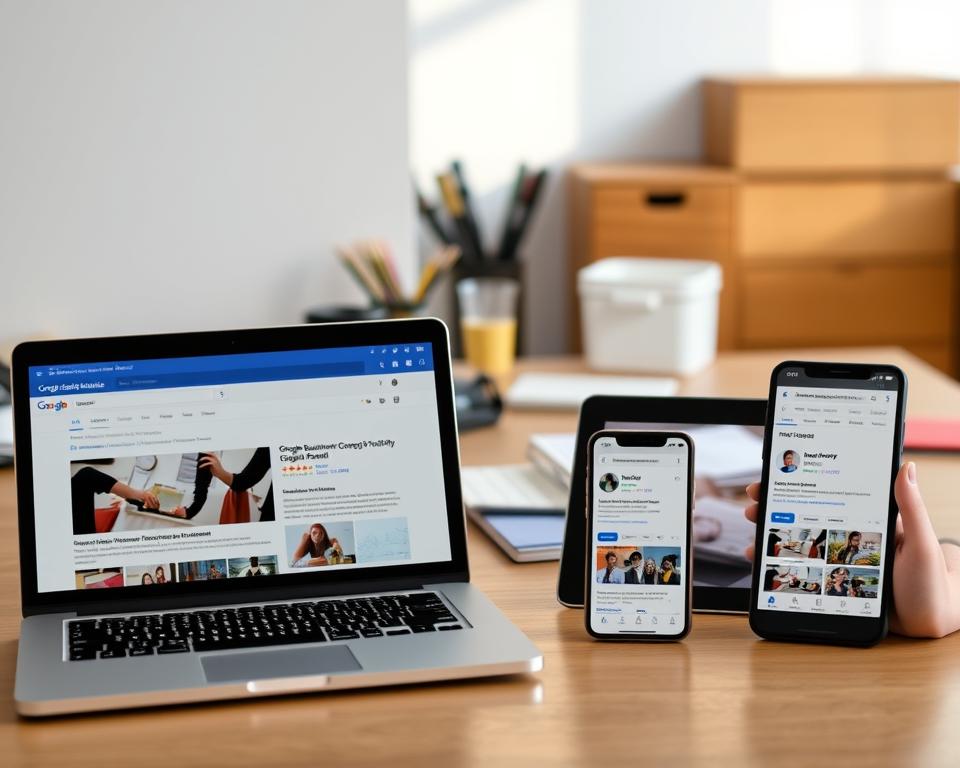
Definition and appearance in search results
Often referred to as the Local Pack surfaces three nearby options. Google shows these results when it thinks you’re looking for nearby services. It uses Business Profile data to find the best matches.
Clicks, calls & visits: the Map Pack effect
Placement in the Local Pack drives more instant actions than standard organic. Studies by BrightLocal, Neil Patel, and Red Local SEO get higher engagement. Data shows 76% visit a nearby business within a day.
Outside the Pack, average organic CTR can hover around ~2.6%. That underscores the Map Pack’s power for calls and visits.
How it differs from regular organic results and paid listings
It’s distinct by leveraging GBP freshness and local signals. It’s more visible than many organic listings. Sponsored local ads can also appear, but those are paid.
Earning a spot in the three featured listings depends on Google Map Pack ranking factors and strong local SEO strategies. Budget alone won’t secure placement.
Optimizing Your Google Business Profile
Start by claiming and verifying your GBP. It proves ownership to Google and improves your eligibility for local results. Make sure your profile is always verified and update it if you change ownership.
Complete all profile fields for clarity. Use your real business name and avoid keyword stuffing. Pick precise categories and drop the pin correctly.
List a local line and your site. Add service areas as appropriate. Keep standard and holiday hours current to reduce confusion.
Maintain consistent formatting. Keep address style uniform across listings. Avoid duplicate profiles to prevent confusion and ensure Google trusts your data.
Compelling media helps. Post crisp images and short videos. New visuals can improve engagement.
Create a concise, original description with natural local terms. Point each category to the most relevant page. Reply to reviews to reinforce prominence.
| Task | Why It Matters | Best Practice |
|---|---|---|
| Claim & Verify Profile | Proves ownership, increases visibility | Complete verification; keep status current |
| Accurate NAP | Supports trust and ranking signals | Use consistent address format for location consistency |
| Categories & Description | Helps Google match searches to services | Select precise categories; write a natural local description |
| Hours & Special Hours | Reduces visitor frustration; prevents search errors | Update regularly; include holiday schedules |
| Photos, Videos & Listings | Improves engagement and click-throughs | Post high-quality images, short videos, and product listings |
| Review Management | Builds prominence and local trust | Ask for reviews ethically; reply promptly and professionally |
Google Map Pack ranking factors
Map Pack placement rests on three pillars. Mastering relevance, distance, and prominence helps you appear more often. Expect more direction requests and calls.
Relevance: matching services, categories, and descriptions
Relevance checks if your Business Profile matches what users are looking for. Provide comprehensive GBP details. Select precise categories, list services, and keep the description clear.
Use tasteful local modifiers in copy. This helps Google match your listing with searches that match your services.
Name offerings specifically. Mirror wording between site and GBP. It reduces ambiguity for Google.
Distance: proximity signals and how Google estimates location
It reflects nearness to the searcher. Without explicit location, Google infers via IP and signals. This makes being close to the searcher important for “near me” searches.
Keep address and service areas accurate. Build neighborhood pages for coverage. That supports proximity signals.
Prominence: reviews, backlinks, and offline reputation
Prominence reflects online/offline reputation. Reviews and links weigh heavily. High review totals and strong ratings help your prominence in the Map Pack.
Encourage honest reviews and pursue quality links. Think chambers, newspapers, and trade groups. That raises perceived authority.
Optimizing NAP and Location Consistency Across the Web
NAP consistency is crucial. Google checks your Business Profile against other directories like Yelp and Facebook. Minor mismatches can reduce visibility.
Why consistent Name, Address, Phone matter to Google
Google validates real-world presence. Having the same details everywhere makes it clear. That boosts Pack eligibility.
Managing directory listings and citation accuracy
Audit citations across major platforms. Make sure everything is the same, including suite numbers. Eliminate dupes to prevent dilution.
Citation tracking workflow
Maintain a central log or use software. They highlight errors to fix. Regularly check and update your listings to keep your information consistent.
NAP hygiene checklist
- Use the exact legal business name on all listings.
- Keep address style uniform.
- Keep the same phone format and country code on every profile.
- Claim big and vertical directories.
- Maintain a central citation ledger.
Keeping your NAP details consistent and updating your citations regularly boosts your local authority. It improves local discovery and Pack presence.
Winning with Customer Reviews
Customer reviews greatly impact how people view a business and its local presence. Positive feedback and thoughtful responses show you value your customers. Monitoring trends refines GBP and local tactics.
Search engines look at review counts and average ratings as trust indicators. Businesses with many high ratings often rank higher in the Google Map Pack. Ongoing real reviews support more clicks and directions.
Best practices for requesting reviews without violating policies
Invite satisfied customers to leave concise, specific feedback. Include direct links in follow-ups and receipts. Display in-store signs that guide customers to review steps. Never offer incentives for positive reviews or ask for fake ones; these actions can harm your reputation.
Responding to positive and negative reviews to increase trust
Respond promptly—ideally within a week. Express thanks and reference specifics. For criticism, empathize, explain next steps, and move sensitive talk offline. Quick, professional responses can improve how customers see you and help with Google My Business optimization.
Use GBP to monitor review trends. Use this data to improve your outreach and services. Align your review management with your local SEO strategies to stay competitive and influence the Google Map Pack ranking factors over time.
On-Page Website Optimization for Local Search Signals
Solid on-page signals tie your site to local intent. Make sure your Name, Address, and Phone (NAP) are the same everywhere. It reinforces local credibility.
Embedding Google Maps and showing exact NAP
Add an interactive map on key pages. Use the same address as your Google Business Profile. Add your full NAP in every page footer so visitors and search engines see it everywhere.
This makes your site and Google Business Profile match. It helps with click-to-directions and keeps your location consistent.
Local modifiers in content
Make service+city pages. Favor service+location phrases.
Keep your headings and meta text easy to read. That aids Pack relevance and UX.
Content that reinforces locality
Make short, unique pages for staff bios, neighborhood news, and seasonal offers. Add hours, localized about copy, and testimonials.
Events, community partnerships, and case studies from your area boost your site’s prominence. They help users find timely, useful info.
| On-Page Element | What to Include | Benefit for Local Ranking |
|---|---|---|
| NAP in footer | Exact business name, full street address, local phone number | Improves location consistency and trust with Google |
| Embedded Google Map | Interactive map tied to the same profile address on Contact and About pages | Boosts click-to-direction signals and aligns site with profile |
| Localized service pages | City/neighborhood terms, service details, unique content per area | Targets local queries and aids Google Map Pack ranking factors |
| Local content sections | Staff bios, events, local testimonials, operating hours | Builds relevance and prominence for nearby searches |
| Technical basics | Fast pages, mobile-friendly layout, structured contact markup | Enhances user experience and supports local search signals |
Build Authority with Citations
Business citations and directory listings are key for local SEO. They communicate place and trust. A strong plan increases visibility.
General vs. niche/local directories
Claim large, reputable directories first. Layer on industry and local sites. For example, health providers do well on ZocDoc and WebMD, while restaurants shine on Yelp and TripAdvisor.
Big directories set the foundation. Niche/Local sites add targeted, high-intent traffic.
Ensuring citation consistency and avoiding duplicates
Uniform NAP outranks sheer count. Match name/phone/address exactly. Minor variations can fragment signals.
Scan and resolve dupes. Merge dupes and repair inaccuracies. That protects rankings and data hygiene.
How citations contribute to prominence and trust
Prominent platforms amplify prominence. They serve as reputation validators.
Track listings, prioritize key sites, and keep mentions accurate. That approach lifts authority and Pack performance.
Earning Local Backlinks
Local backlinks are like votes of confidence for nearby businesses. Google’s local algorithms use these links to judge a business’s prominence and trust. Links from regional outlets can lift Pack visibility. It also supports broader local SEO strategies.
Begin with a prospect list. Focus on regional media and partners. They often publish profiles, event coverage, or resource pages. Pitch events, case studies, or expert quotes.
Creating content that draws links naturally is key. Publish guides, local how-tos, data/surveys. Provide expert commentary to media. Press mentions often carry valuable links.
Use sponsorships and partnerships to build strong local relationships. Sponsor a Little League team, a charity run, or a city festival and ask for web mentions in return. Partner with complementary businesses to co-create resources that both sites host. These actions support local link building while delivering community goodwill.
Prioritize high-quality, relevant links. A mention from a well-known regional outlet carries more weight than many low-authority citations. Log prospects, outreach, and links. Consistent effort yields steady gains in Google Map Pack ranking factors and long-term local authority.
Make Mobile Work for Local
Local intent is largely mobile. Fast, usable pages convert Pack traffic. Focus on mobile speed and usability.
Mobile performance essentials
Speed is critical. Compress media, enable caching, trim heavy scripts. A responsive design makes it easy to use on phones and tablets.
Keep your site simple and navigation easy. Use big buttons for calls and directions. Support accessibility and clarity.
Why mobile changes behavior
Mobile searchers need fast local answers. Directions/calls are common actions. A fast-loading site with correct contact info encourages more clicks from the Map Pack.
Mobile searches focus on being close to the user. Display ETA, maps, and open status.
Tech tasks that support local
Do regular technical audits. Ensure schema and security are correct. Submit sitemaps and resolve crawl issues.
Keep optimizing. Tighten assets and delivery. Add Google Maps for quick directions and ensure your contact details match your Business Profile.
This improves UX while reinforcing locality. They send strong signals about your location and service relevance.
Service Areas & Proximity Signals
Local visibility depends on clear service areas and strong signals about where you operate. Align GBP service areas to reality. Back it up with location content.
Setting and optimizing your service area in Google Business Profile
Enter only service areas you actually serve. Include cities/ZIPs/neighborhoods you cover. Avoid overbroad areas that erode trust.
Keep your on-profile details consistent with your website and directory listings. This approach supports accuracy and helps Google match your profile to nearby queries.
Using local keywords and pages to target nearby searches
Publish unique pages per area. Use phrases that combine services and locations. This tactic improves relevance for local queries and boosts your chances of appearing in maps and organic listings.
Make area pages easy to find. It streamlines navigation and crawling. It strengthens local architecture.
How Google infers location
Google uses device or IP-based location. For implicit-location queries, proximity may weigh heavily.
Cover proximity by aligning service areas, pages, and citations. That creates a clear local footprint. It improves targeting for nearby customers.
Measure & Optimize Continuously
Begin with GBP baselines. Look at Map Pack impressions, website clicks, phone calls, direction requests, and search queries. Set targets and test plans from baselines.
Key metrics help you see how well your GMB is doing. Watch Map Pack impressions, click-through rate, website visits, phone calls, and direction requests. Include review cadence, sentiment, and link counts. Review weekly to catch trends.
Use different tools to measure your progress. GBP yields visibility data. Google Analytics links website behavior to Map Pack clicks. Track local SERP positions with tools.
Listing management platforms like ReviewTrackers help with reviews and citations. GSC surfaces indexing and link info. Together, these paint the full picture.
Run controlled tests to see what works. Iterate on profile, content, and reviews. Change one thing at a time and track the impact on impressions and clicks.
Maintain an experiment log. Use an experiment log with dates, actions, and outcomes. Iterative, logged testing works best.
Publish a monthly rollup of wins/losses/next steps. Chart key metrics. Refine plans based on measured results.
Final Thoughts
Climbing the Local Pack requires ongoing local SEO. Make sure your Google Business Profile is complete and up-to-date. Also, keep your business information the same everywhere online.
Adding new photos and videos regularly helps too. It reinforces credibility and relevance.
Customer feedback and quick responses are key to standing out. Local links and clean citations reinforce prominence. Support with localized content and mobile experience.
First, get GBP verified. Fix listings and encourage feedback. Track Pack visibility and actions.
For support, consider Marketing1on1. They specialize in improving Map Pack results. They’ll help you get more clicks, calls, and visits to your business.